 Español
 Pусский
 عربي
عربي  Bahasa Indonesia
Recommended Parameters for Paper Cup Machine with PE Coated Paper
Publish Time:
Author:
Mingguo
Visit: 621

 English

A production manager switches to a new roll of PE coated cup board. The settings that worked on the previous roll now produce seals that peel apart, edges that burn, or bottoms that leak. PE coated paper is not a single material—its behavior changes with coating weight. The polyethylene layer that keeps coffee from seeping through also determines how much heat and pressure your Paper Cup Machine must apply. Too much heat burns the coating and creates brittle edges; too little leaves the seal incomplete, causing leaks. Too much pressure crushes the paper fibers; too little fails to bond the coating to itself. This guide provides benchmark parameters for common PE coating weights, explains how coating thickness changes temperature requirements, and gives you a validation method that works for any PE coated stock.
PE coatings for paper cups typically range from 12 to 25 g/m². A 12 g/m² coating is common for cold cups and single‑wall cups, where the main requirement is preventing the paper from absorbing moisture. A 25 g/m² coating is used for hot coffee cups, soup cups, and double‑wall applications where the heat from the drink could soften a thinner coating and cause leakage.
Each increase in coating thickness demands more heat for two reasons. First, the polyethylene layer itself is thicker and requires more energy to reach its melting point (typically 105‑115°C at the coating interface, with tool surface temperatures much higher due to heat transfer losses). Second, thicker coatings act as thermal barriers; the heat must penetrate through more material before the base paper absorbs enough to form the bond.
The general relationship: for every additional 5 g/m² of PE coating, increase sealing temperature by approximately 8‑10°C. For single‑side PE, tool surface temperatures typically run between 150‑180°C; for double‑side PE, the temperature must be higher, typically 180‑220°C, because the outer coating can cause sticking to the forming mandrel if not properly controlled. A 5°C variation across the sealing plate can turn a good batch into a leaker.
| PE Coating (g/m²) | Sidewall Sealing Temperature (°C) | Bottom Sealing Temperature (°C) | Notes |
|---|---|---|---|
| 12‑15 | 180‑195 | 190‑205 | Standard for cold cups, single‑wall |
| 16‑20 | 195‑210 | 205‑220 | Most common for hot beverage cups |
| 21‑25 | 210‑225 | 220‑235 | Heavy‑duty hot cups, soup cups |
| Double‑side PE (any weight) | +10‑20°C vs. single‑side | +10‑20°C vs. single‑side | Outer coating requires extra heat |
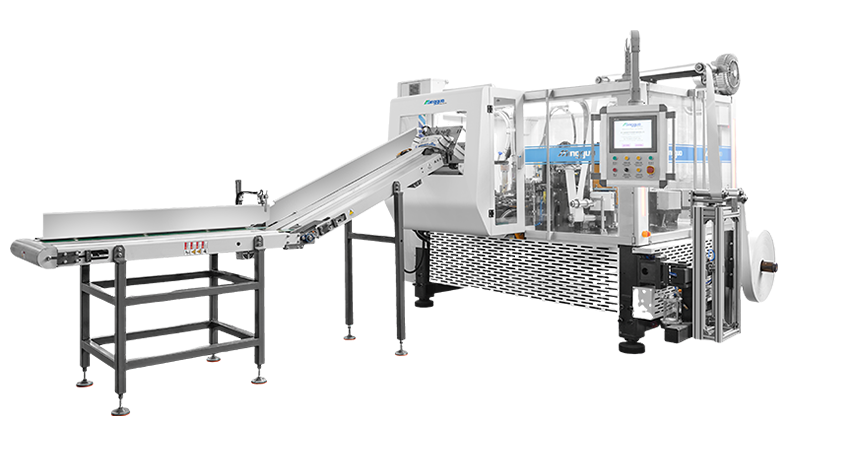
The sealing temperature needs to be higher for double‑side PE (typically 180‑220°C vs. 150‑180°C for single‑side) because the outer coating can cause sticking to the forming mandrel if not properly controlled. Double‑side PE paper is stiffer and more prone to curling at the edges, which affects how the blank wraps around the forming mandrel. Mingguo‘s MG‑1000 High‑speed Horizontal Paper Cup Forming Machine uses precision cutting to ensure each sheet of paper is accurately trimmed before forming, maintaining quality and consistency for both single‑ and double‑side PE stocks.
Pressure settings affect how the PE coating bonds to itself and how the paper fibers compress. Too little pressure leaves air gaps between coating layers, causing leaks. Too much pressure crushes the paper fibers, reducing cup stiffness and potentially cracking the coating.
Standard cups (200‑400 ml). Set pneumatic pressure between 4‑6 bar. This range works for most 8‑16 oz cups on 250‑350 gsm paperboard. At the lower end (4‑5 bar), the cup body feels slightly softer but the coating remains intact. At the higher end (5‑6 bar), the seal is stronger but the paper shows visible compression marks.
Large bowls and buckets (>600 ml). Increase pressure to 6‑8 bar. The larger diameter means more area to seal, requiring higher total force to achieve the same pressure per square millimeter. However, higher pressure must be paired with slower forming speed to give the coating time to flow before the pressure peaks. Mingguo‘s MG‑1000 platform supports mold exchangeability across the full range of common cup sizes from 4‑16 oz (100‑450 ml) with tool‑less or minimal‑tool mold swaps.
Speed affects how long the paper contacts the heated sealing surfaces. When you run faster, the paper spends less time in contact with the hot seal plate. This means the coating receives less heat energy per cup. To compensate, you must either increase temperature or reduce speed. For every 10% increase in speed above the rated baseline, increase sealing temperature by 3‑5°C to maintain the same heat input. Conversely, running slower than the machine‘s nominal speed may require lower temperatures to avoid burning the coating. For any new PE coated paper stock, begin at 70% of the machine’s nominal speed for the first 100 cups. After inspecting seals and checking for leakage, increase speed in 10% increments. If you see burned or brittle seals, lower temperature or reduce speed. If you see incomplete peeling seals, increase temperature or slow down. The MG‑1000 achieves a stable cup making speed across different paper grades, with production rates varying by cup size and paper quality. Mingguo machines have three turntables, an open cam design, intermittent indexing, and a longitudinal axis structure for superior functionality and improved forming efficiency.
Burned or brittle coating. The cup edge or bottom seal area looks brown, feels hard, or flakes when flexed. The temperature is too high. Reduce sealing temperature by 5‑8°C. If the burning is localized to one area, check for uneven seal plate temperature using an infrared thermometer. A 5°C variation across the sealing plate can turn a good batch into a leaker, so bottom heating must be exceptionally consistent.
Peeling seal—the layers separate when you try to peel the seal. The seal looks complete but pulls apart with minimal force. The temperature is too low, or the pressure is insufficient. Prioritize raising temperature first—increase by 5‑10°C. If peeling persists, increase pressure by 0.5‑1 bar.
Wrinkled bottom or sidewall. Paper is shifting during sealing. The blank feed timing is off, or the forming mandrel is worn. Check that the paper blank is feeding squarely. If the problem appears after a mold change, verify that the forming mandrel is fully seated. The MG‑1000‘s three independently driven turrets allow each station to be serviced or adjusted without necessarily halting the others.
Inconsistent seal across the cup circumference. One area of the seal is perfect; another area leaks. This is a temperature distribution issue. Measure the seal plate temperature at multiple points. Use a machine with multi‑zone PID control for even heating. Machines that use LEISTER‑style heaters with multi‑zone PID control maintain even temperature across the entire sealing plate.
Q: Can I use the same parameters for matte PE coated paper?
A: Matte PE coatings often have a slightly different surface finish and additive package that affects heat transfer. Matte coatings typically require approximately 5°C higher sealing temperature than glossy PE of the same weight. The smoother matte surface reduces friction, which can cause the paper to slip in the feed section; check feed roller tension when switching to matte finishes.
Q: How often should I recalibrate temperature sensors?
A: Recalibrate every 3 months, or immediately when you change paper roll batches. Thermocouples drift over time, and a 10°C error in sensor reading produces a seal that either burns or leaks. Use a contact pyrometer to verify actual tool surface temperature against the controller reading. Mingguo’s control system maintains tight temperature control during long‑term, high‑load operations, preventing costly downtime.
Q: Does ambient temperature affect settings?
A: Yes. In winter, when shop temperatures drop below 15°C, the paper itself is colder when it enters the machine. The heating system must compensate. For ambient temperatures below 15°C, increase sealing temperature by 2‑3°C. For very cold shops (below 10°C), also pre‑condition paper rolls by storing them in a warmer area for 24 hours before production.
Q: What’s the difference between single‑side and double‑side PE for parameter settings?
A: Single‑side PE has the coating only on the inside of the cup. It seals more easily but offers less overall moisture resistance. Double‑side PE has coating on both sides—inside seals against the liquid, outside prevents condensation from soaking into the paper. The sealing temperature needs to be higher for double‑side PE (typically 180‑220°C vs. 150‑180°C for single‑side). Double‑side PE paper is also stiffer and more prone to curling, which affects blank feeding and forming. The MG‑1000 supports both single‑ and double‑side PE stocks with tool‑less mold changes between configurations.
Before committing a new PE coated paper roll to full‑speed production, run 50‑100 test cups at reduced speed and document your settings. Use this checklist.
First, run 50 cups at 70% of nominal speed, using the recommended temperature for your coating weight as a starting point. Second, perform a peel test on 10 randomly selected cups—the seal should resist peeling by hand, and the paper fibers should tear before the seal separates. Third, fill cups with water at the intended service temperature (85‑95°C for hot cups) and let them sit for 5 minutes. No leaks should appear. Fourth, inspect the cup rim for burns, brittleness, or incomplete curling. Fifth, once the test batch passes all checks, increase speed to 85% and repeat the validation. Finally, if the cups pass at 85%, increase to 100% nominal speed and monitor the first 500 cups closely.
Record the final settings—temperature, pressure, and speed—in a log by paper roll batch number. Mingguo‘s servo-driven recipe storage allows operators to recall saved settings for specific paper grades and cup sizes, reducing changeover time between jobs to minutes instead of hours.
→ Request a quote from Mingguo Machinery for the MG-1000 High-speed Horizontal Paper Cup Forming Machine — Share your typical PE coating weight (12‑25 g/m²), cup size range (4‑16 oz), and target production speed. Their application engineers can provide preset parameter files for your specific paper grade.
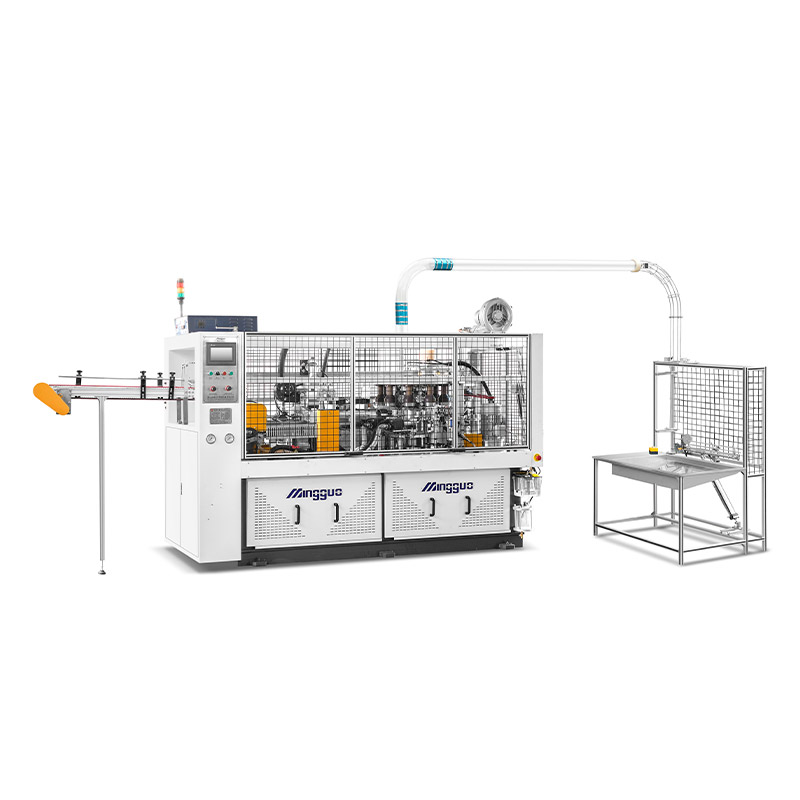
Paper cups specifications:
200 pcs/min
4-16oz(100-450mI) (mold exchangeable)
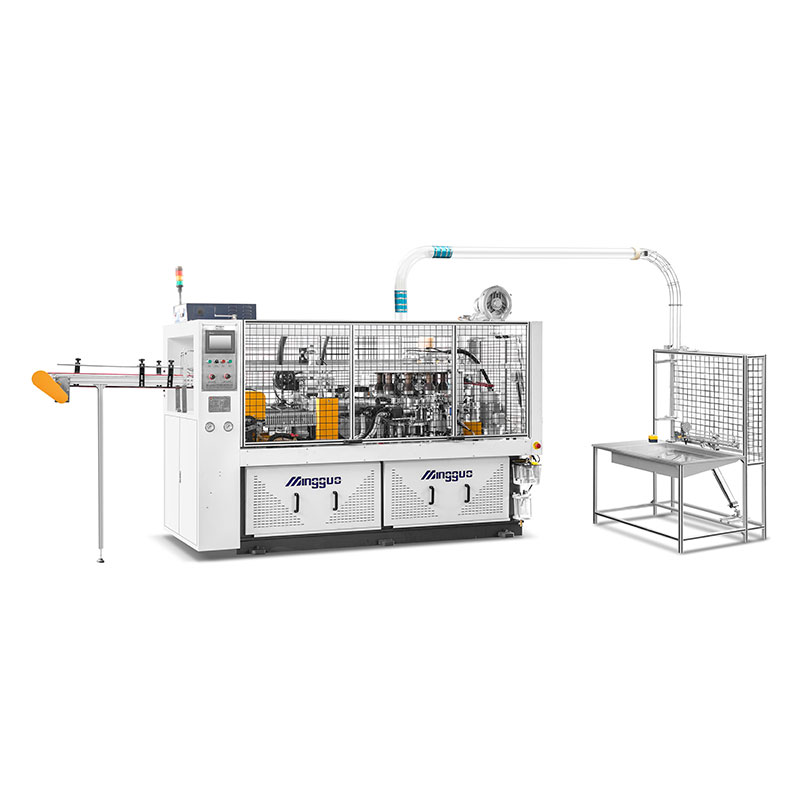
Paper cups specifications:
4-16oz (can be customized by max.26oz)
(100-450ml)(mold exchangeable)
Top:55-105mm
Height:60-135mm
Bottom:55-75mm
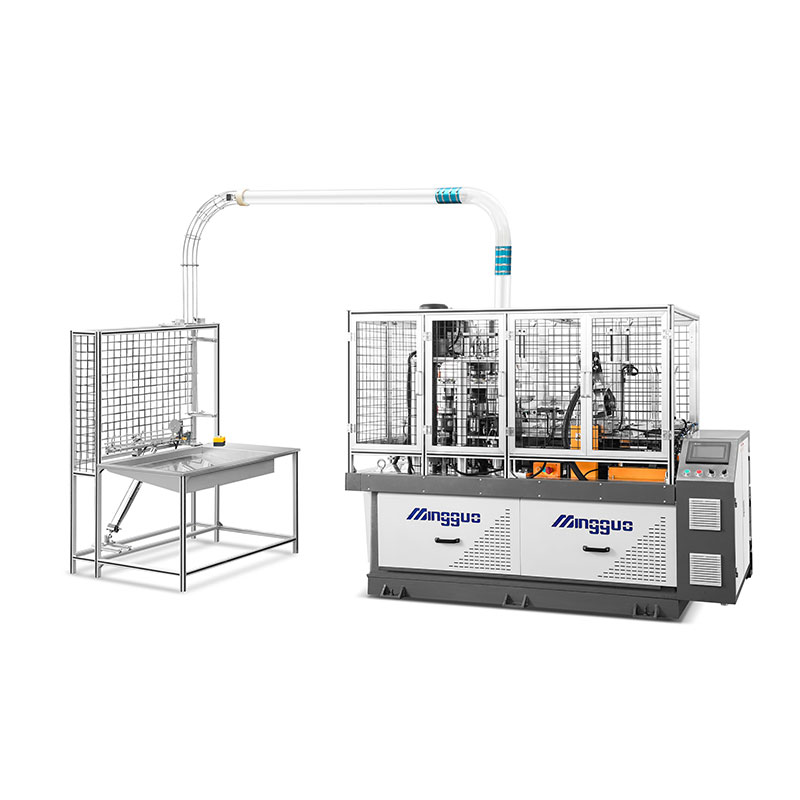
Paper cups specifications:
(100-350ml)(mold exchangeable)
Top: 55-90mm
Height: 60-110mm
Bottom: 40-65mm


