 Español
 Pусский
 عربي
عربي  Bahasa Indonesia
How to Fix Inconsistent Bottom Sealing on a Paper Cup Machine
Publish Time:
Author:
Mingguo
Visit: 1427

 English

A run of paper cups comes off the line. Some hold water without issue. Others leak from the bottom within seconds. Inconsistent sealing wastes material, slows production, and damages customer confidence. On a Paper Cup Machine, most bottom sealing problems trace to one of five root causes. The good news: you don’t need specialized tools to diagnose them. This guide walks through each checkpoint in order—from heating temperature to cam timing—so you can identify and fix the issue before the next shift starts.
PE‑coated paper requires precise heat to activate the adhesive layer. If the temperature varies by more than ±5°C across the sealing plate, some cups will seal properly while others leak. The PE coating melts at around 110°C, but the sealing plate typically runs between 230°C and 300°C to transfer heat through the paper thickness quickly. Variations as small as 10°C at the coating interface can make the difference between a sealed bottom and a leaky one. Use an infrared thermometer to measure the sealing plate at three points: left, center, and right. All three readings should be within a narrow range. If the left side runs cooler, cups from that side will show incomplete sealing. If the center runs hot, the paper may scorch. Check the heating element connections. Replace any heater band that fails to reach setpoint. Clean the sealing plate surface—old adhesive residue acts as an insulator. The knurling wheel’s heating panel should be set between 230°C and 260°C. If the seal remains incomplete, raise the preheat zones by 20°C initially. If the surface still shows smooth areas, increase the knurling temperature by 10°C increments until the seal surface becomes rough or textured—a sign of proper material fusion.
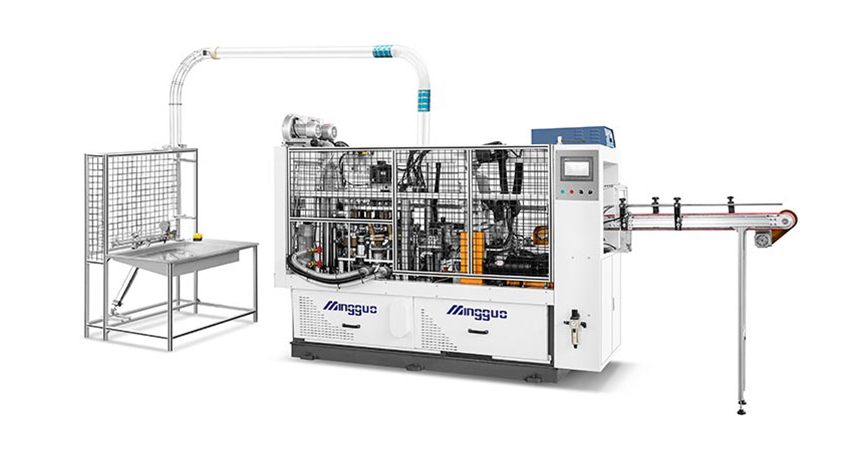
The cup bottom is sealed perfectly on one side but completely open on the other. This is not a heating issue—it’s a mechanical alignment problem. The sealing plate is making contact at an angle rather than parallel to the bottom paper disc. First, verify that the sealing plate is parallel to the bottom forming station. Use a feeler gauge to measure the gap around the perimeter when the press is closed. If one side shows a wider gap, adjust the top pressure spring tension or the cylinder stroke length accordingly. For pneumatic systems, check the cylinder pressure gauge—typical range is 0.3–0.5 MPa. The goal is even force distribution. Also inspect the knurling pattern. If the knurling has worn flat, the bonding effect is greatly reduced. Inspect the knurling pattern every 500 operating hours and replace if the texture is no longer visible.
If the web tension is too low, the paper wanders during feeding. The bottom disc enters the forming station at a slight angle, and the seal becomes uneven. This problem often appears intermittently—good cups, then a bad cup, then good again. With the machine stopped, pull the paper web by hand at the unwind stand. There should be uniform resistance across the full width. If the web pulls easily, increase the brake tension. If it resists, the tension may be too high, stretching the paper. Also check feed roller wear. A worn roller may drive one edge faster, skewing alignment. If roller diameter differs by more than 0.5mm, replace the roller.
Even within a single batch, bottom paper disc thickness can vary. A variation exceeding 0.05mm changes how much the paper compresses under sealing pressure. Thicker areas seal properly; thinner areas may not seal at all. This is a material problem. Use a micrometer to measure bottom discs at three or four points around the circumference. If measurements differ beyond tolerance, reject the batch. Keep a log by batch number. Also, PE‑coated board absorbs moisture from humid air. Wet paper requires more heat to seal, and steam can create voids. Store rolls in humidity below 60%. Discard the first few meters of a roll if moisture ingress is suspected.
The problem is intermittent, appears only at high speed, and persists after replacing consumables. This points to the cam mechanism that actuates the sealing press. With the machine inching, observe the bottom forming station. The sealing press should contact the cup bottom when the cup is fully seated in the forming die. If the press closes early, the seal will be off‑center. If it closes late, the seal will be incomplete. On a properly timed machine, the sealing plate begins its closing stroke when the cam reaches approximately the 270‑degree position, and completes the seal by 315 degrees. Cam timing adjustment requires loosening the cam‘s mounting bolts and rotating it relative to the main drive shaft. Refer to the machine manual for timing marks. If uncertain, call the manufacturer.
If all five checks pass but inconsistent sealing persists, the problem may lie in the electrical control board or a faulty sensor. Modern servo‑driven Paper Cup Machine s rely on precise timing signals from encoders and proximity sensors. A sensor that triggers late or early can disrupt the sealing sequence even when mechanical components are correctly set. Most manufacturers, including Mingguo, offer remote diagnostic support. Before calling, document the symptoms: whether the problem occurs on every cup or intermittently, at what speed it appears, and any error codes shown on the control panel.
Can worn sealing belts cause inconsistent bottom seals?
Yes. On machines that use a Teflon belt, a worn belt reduces heat transfer. Replace the belt every 500 operating hours.
Should I adjust sealing pressure while the machine is running?
No. Always stop the machine. Adjusting pressure on a moving press risks injury and makes precise adjustment impossible.
How often should I inspect bottom sealing components?
Inspect the sealing plate, heating elements, knurling pattern, and pressure springs every 500 hours.
Can the resin lot cause sealing issues?
Yes. Different PE coatings have different melt flow properties. When switching batches, run a test. If needed, increase preheat by 20°C and knurling by 10°C increments until the seal surface becomes uniformly textured.
The MG-C600M-S High Speed Servo Paper Cup Machine from Mingguo Machinery achieves a stable production speed of 80 to 150 cups per minute. The servo‑driven system maintains precise timing across all stations—paper feeding, bottom punching, preheating, sealing, knurling, and curling—eliminating timing drift. The bottom sealing station uses independently controlled heating zones with closed‑loop temperature monitoring. When the sealing temperature drifts, the control system corrects it automatically. The machine’s multi‑layer safety protection includes fault detection for out‑of‑paper, jammed cups, and off‑timing events. When a fault is detected, the machine stops automatically. Mingguo offers remote diagnostic support. The machine accepts standard cup board and PE‑coated paper, with quick‑change tooling for different cup sizes.
Inconsistent bottom sealing rarely requires a major overhaul. Start with heating uniformity, then pressure distribution, paper web tension, bottom paper quality, and cam timing. Record results and adjustments. Over time, this log becomes a reference for future troubleshooting.
→ Request a quote from Mingguo Machinery for the MG-C600M-S High Speed Servo Paper Cup Machine — Share your target cup size, desired output speed, and monthly production volume. Their technical team can provide machine specifications and sealing optimization guidance.
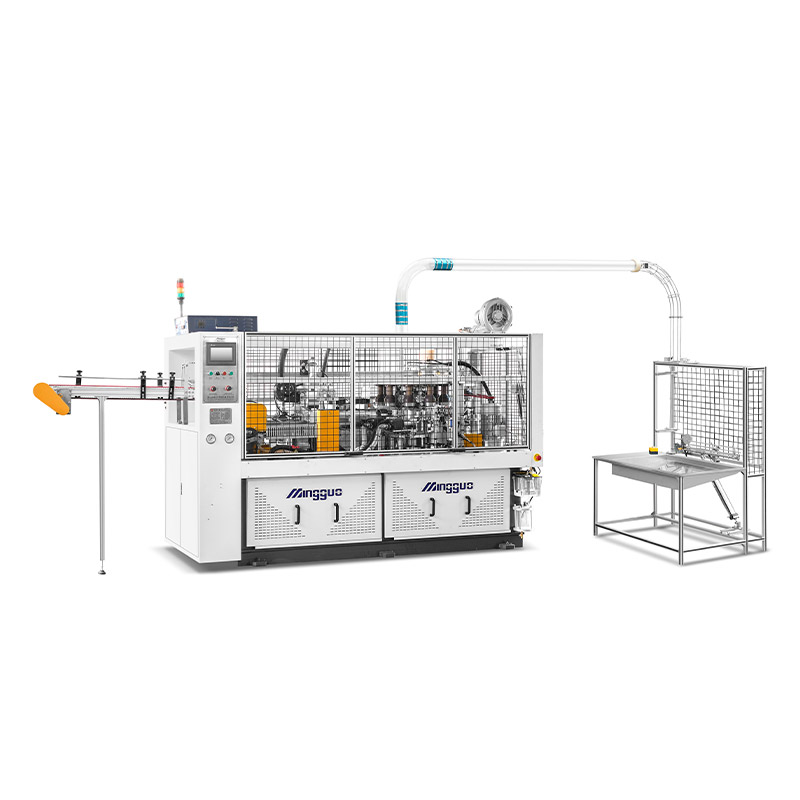
Paper cups specifications:
200 pcs/min
4-16oz(100-450mI) (mold exchangeable)
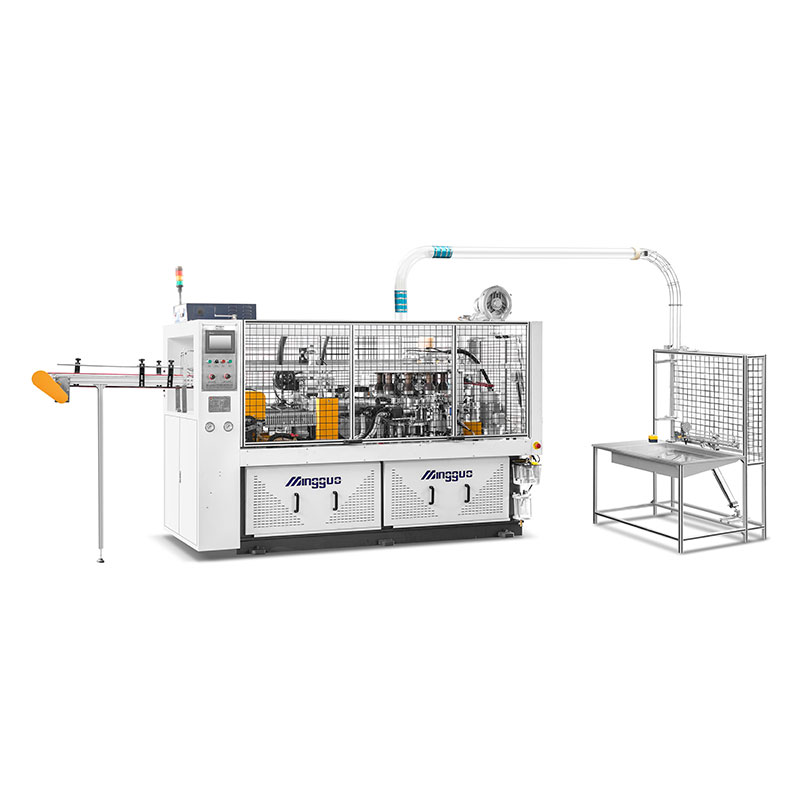
Paper cups specifications:
4-16oz (can be customized by max.26oz)
(100-450ml)(mold exchangeable)
Top:55-105mm
Height:60-135mm
Bottom:55-75mm
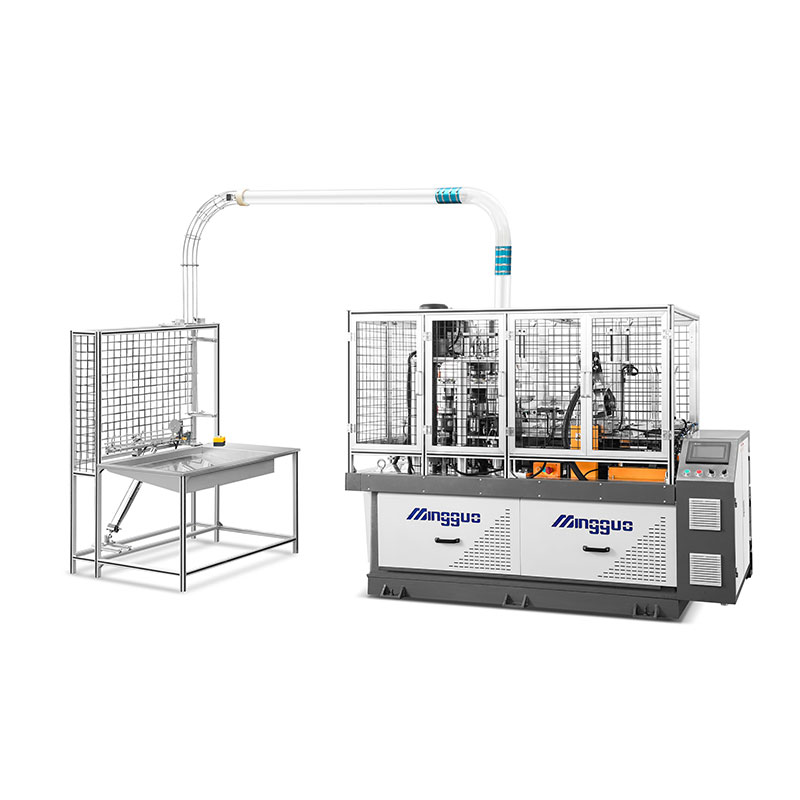
Paper cups specifications:
(100-350ml)(mold exchangeable)
Top: 55-90mm
Height: 60-110mm
Bottom: 40-65mm


