
 English
 Español
 Pусский
 عربي
عربي What Materials Can a Paper Bucket Making Machine Process?
Publish Time:
Author:
Mingguo
Visit: 2762

You're planning a production run of paper buckets. The order calls for a specific material — but you're not sure if your machine can handle it. Can you use plain kraft? What about double-sided PE coated paper for soup buckets? Will recycled paperboard work, or will it crack at the crease?
A paper bucket machine is designed to process a range of paper materials, but not all papers are created equal. The right material choice affects bucket strength, seal quality, and production efficiency. This guide covers the four main material types — single PE coated, double PE coated, uncoated kraft, and recycled paperboard — along with their thickness ranges, sealing requirements, and best-use applications.
Single-side PE coated paper is the most common material for paper bucket production, especially for dry food applications.
Single-side PE coated paper is ideal for dry food products like flour, nuts, and grains. The PE coating on the outside provides moisture resistance, preventing the bucket from absorbing humidity and losing structural integrity. The uncoated inside surface allows for food-grade contact without additional lining.
The recommended thickness range for single-side PE coated paper is 250–400 gsm. Below 250 gsm, the bucket lacks the rigidity needed to hold its shape during filling and stacking. At 400 gsm and above, the material becomes difficult to form without cracking at the crease lines.
The PE coating on the outside provides the heat-sealable surface for the bucket's seam. The uncoated inside means the bucket can be printed on the outside without affecting the food contact surface. For dry food applications, this is the standard choice.
Double-side PE coated paper is the go-to material for wet or oily food contents, where both sides of the bucket need moisture protection.
Double-side PE coated paper is essential for products like fried chicken buckets, soup buckets, and other food containers that hold moist or oily contents. The PE coating on both sides creates a complete moisture barrier, preventing the paper from absorbing liquids and becoming soft or leaking.
The double-sided coating creates a sealing challenge. Since both surfaces are coated, the heat-sealing process must penetrate two PE layers to form a strong bond. This requires higher heat-sealing temperatures and longer pressure dwell times compared to single-side coated paper. Operators may need to increase the sealing temperature by 10–15°C and extend the sealing time to achieve a reliable seal.
Double-side PE coated paper meets food-grade standards, making it suitable for direct contact with food. The PE layer is FDA-compliant and safe for use with hot and cold foods.
Uncoated kraft paper is an eco-friendly option for applications where moisture resistance is not required.
Uncoated kraft paper is fully recyclable and compostable, making it the choice for environmentally conscious brands. It's often used for dry, short-term storage applications where the bucket does not need to hold liquids or high-moisture contents.
Without a PE coating, uncoated kraft paper is not liquid-proof. It cannot be used for wet or oily foods. It's suitable for dry goods like nuts, snacks, or as an outer decorative layer over a lined inner bucket. For liquid applications, it requires an additional lining or coating.
Uncoated kraft paper typically runs in the 250–350 gsm range. It forms well on standard bucket machines, but the lack of coating means the seams rely entirely on mechanical folding and adhesive (if used) rather than heat sealing.
Recycled content paperboard offers a sustainable option with some limitations.
Paper bucket machines can process paperboard with up to 30% recycled fibers. Beyond this percentage, the short fibers in recycled paper reduce the material's strength, leading to increased breakage at the crease lines and during forming.
The recycled fibers in paperboard are shorter than virgin fibers, which makes the material more brittle. At the crease lines where the bucket is folded, the paperboard is prone to cracking. This is especially noticeable on the rim curl and bottom crease. Higher recycled content (above 30%) significantly increases the reject rate.
Some manufacturers use recycled content paperboard for the bucket body while using virgin paper for the bottom and rim — areas that require higher strength and crack resistance. This hybrid approach balances sustainability with production quality.
Film laminated paper — where a plastic film is applied over the paper surface — is not recommended for standard paper bucket machines.
Film laminated paper creates significant problems during forming. The plastic film layer shrinks when exposed to the heat of the sealing station, causing the paper to warp and the bucket to lose its shape. The result is misshapen buckets that don't stack properly.
If you need to use film laminated paper, you'll need a specialized hot-air sealing machine that can handle the film's thermal properties. Standard heat-sealing bucket machines are not designed for this material.
The thickness of the paper directly affects machine settings. Production planners need to adjust parameters based on the material weight.
With thin paper, the risk is tearing during forming. Reduce the forming pressure to prevent the paper from cracking or tearing at the crease lines. The sealing temperature may also need to be slightly lower to avoid burning the thin material.
Thick paper requires more heat to activate the PE coating and form a strong seal. Increase the heating temperature by 10–15°C and reduce the production speed by 15% to allow sufficient time for the heat to penetrate the thicker material. The forming pressure may need to be increased to achieve a clean crease.
Below is a quick reference table for material types and settings:
| Material Type | Thickness Range | Best Application | Sealing Challenge |
|---|---|---|---|
| Single PE coated | 250–400 gsm | Dry food (flour, nuts) | Standard |
| Double PE coated | 250–400 gsm | Wet/oily food (soup, fried chicken) | Higher heat, longer dwell |
| Uncoated kraft | 250–350 gsm | Eco-friendly dry goods | Mechanical fold only |
| Recycled board | 250–350 gsm | Sustainable packaging | Cracking at crease |
| Film laminated | Not recommended | — | Shrinkage, warping |
Q: Can I use bowl paper for buckets?
A: Yes, but with a caveat. Bowl paper is similar in thickness and coating to bucket paper, but buckets are typically taller than bowls. You must check that the paper feed table stroke is sufficient to handle the longer sheet length required for bucket production. If the stroke is too short, the paper will not feed properly.
Q: Does paper color affect machine performance?
A: Darker colored paper absorbs more heat from the sealing station than lighter paper. This can slightly alter the heat-sealing performance. For dark-colored buckets (black, dark blue, dark green), you may need to reduce the sealing temperature by 5–10°C to prevent overheating and burning the coating.
Q: What is the maximum board thickness for a bucket machine?
A: Most standard bucket machines can handle a maximum board thickness of approximately 0.8mm, which corresponds to about 450 gsm. Above this thickness, the material becomes too rigid to form clean creases and the machine may jam or produce defective buckets.
Mingguo Machinery's MG-GT800 paper bucket machine is designed to process a wide range of paper materials — from single PE coated for dry foods to double PE coated for wet contents. The machine features adjustable sealing temperature, pressure, and speed to accommodate different material thicknesses and coatings.
Before you commit to a new material for your production run, always test it on your machine. Run a batch of at least 200 buckets to verify seal strength and bucket uprightness. Check for cracks at the crease lines, bottom seal integrity, and consistent bucket dimensions. A small test run saves thousands of dollars in rejected batches.
Ready to test a new material on your paper bucket machine? Contact Mingguo Machinery for a free material compatibility test. Send your paper sample — their team will run it on the MG-GT800 and provide a detailed report on seal quality, forming performance, and recommended machine settings for your specific material.
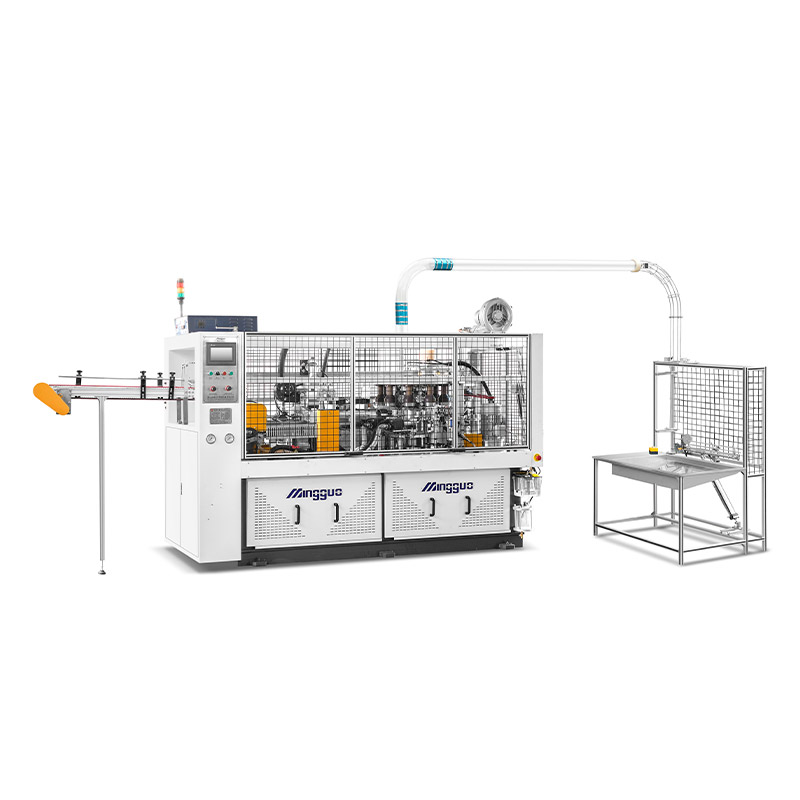
Paper cups specifications:
200 pcs/min
4-16oz(100-450mI) (mold exchangeable)
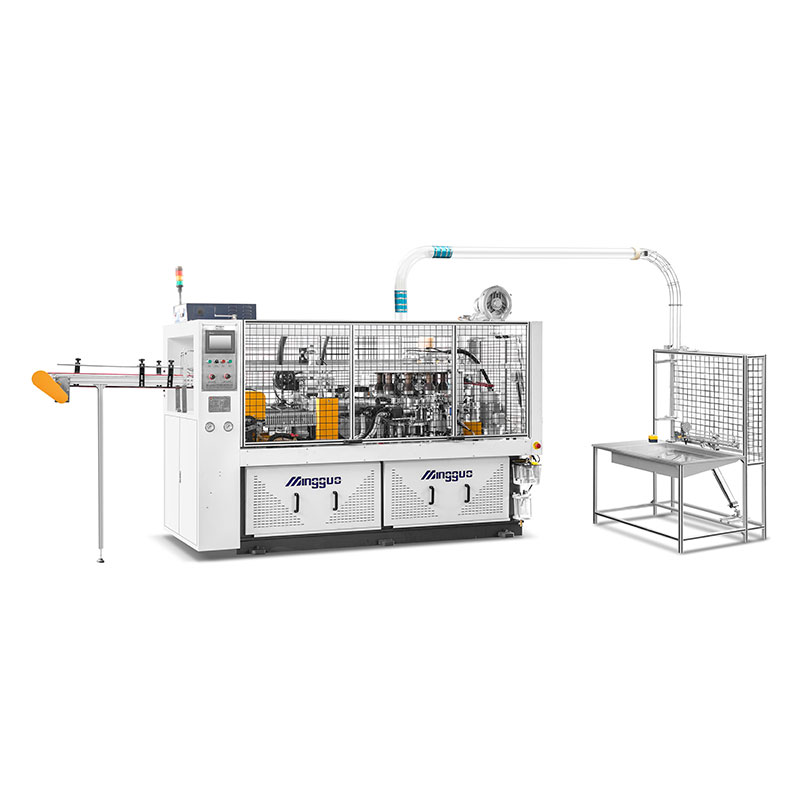
Paper cups specifications:
4-16oz (can be customized by max.26oz)
(100-450ml)(mold exchangeable)
Top:55-105mm
Height:60-135mm
Bottom:55-75mm
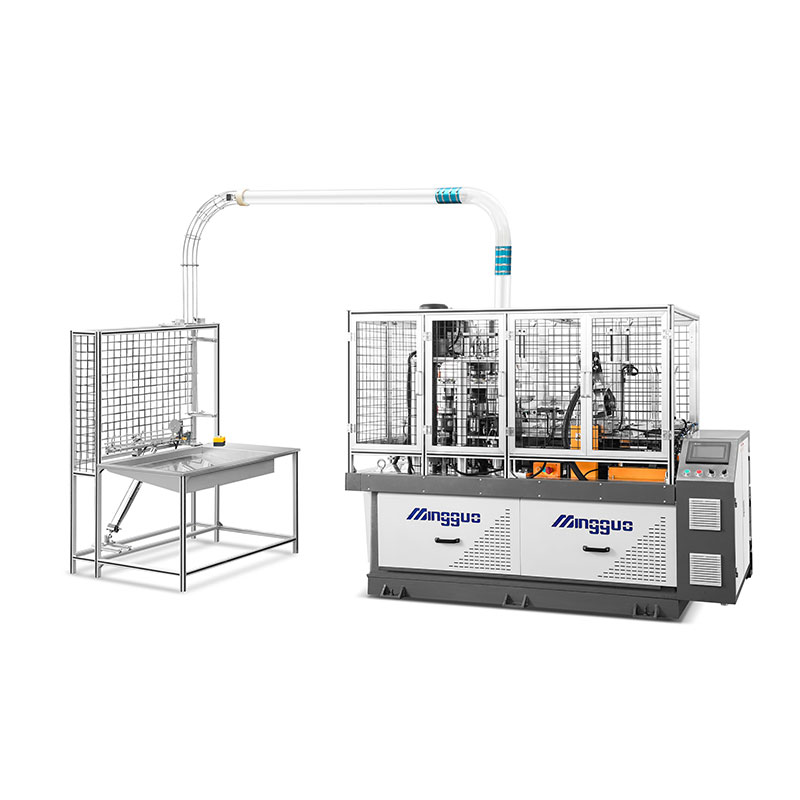
Paper cups specifications:
(100-350ml)(mold exchangeable)
Top: 55-90mm
Height: 60-110mm
Bottom: 40-65mm


