 Español
 Pусский
 عربي
عربي  Bahasa Indonesia
Best Maintenance Practices for Automatic Paper Bowl Forming Machine
Publish Time:
Author:
Mingguo
Visit: 594

 English

You’re running a batch of paper bowls, and everything is going smoothly—until it isn‘t. A sensor fails. A bearing seizes. A heating plate gets clogged with paper residue. Suddenly, you’re down for hours instead of producing.
The difference between a line that runs reliably and one that constantly breaks down is almost always maintenance. Planned preventive maintenance can reduce unexpected downtime by up to 60%. This guide walks you through a practical maintenance schedule organized by frequency—daily, weekly, monthly, and quarterly. We‘ll cover what to check before each shift, deeper weekly inspections, preventive replacements, and overhaul items. For maintenance supervisors and equipment managers, this is a straightforward framework for keeping your Paper Bowl Machine in top condition. Even the best equipment needs a structured maintenance program to deliver its full lifespan.
The first 15 minutes of each shift are the most valuable time you’ll spend on maintenance. These quick checks catch small issues before they become big problems.
Walk the machine and listen for air leaks. A hissing sound indicates a leak in the pneumatic system. Even a small leak reduces the pressure available for forming, which affects bowl quality and cycle time. Check all fittings and hoses for visible wear or cracks.
Paper residue accumulates on heating plates during production. This residue insulates the plate, reducing heat transfer and causing uneven heating. Use a brass brush to gently remove any stuck paper debris. Don‘t use steel tools—they can scratch the plate surface, creating more places for residue to build up.
The central lubrication system keeps moving parts running smoothly. Check the oil level against the minimum mark. If it’s low, top it up with the recommended lubricant. Running the machine with low oil level is one of the fastest ways to wear out bearings and cams.
Before loading paper, run the machine empty for 30 seconds. Listen for any unusual metal-on-metal sounds. A knocking or scraping noise indicates a mechanical issue that needs attention before production starts. This simple test takes almost no time and can prevent a major breakdown.
Weekly maintenance goes beyond the daily surface check. These tasks take a bit more time but catch issues that daily inspections miss.
The vacuum system pulls paper dust and debris through the filter. Over time, the filter clogs and vacuum pressure drops. A drop in vacuum pressure means the paper feed isn‘t as reliable—you’ll get misfeeds and jams. Use compressed air to blow the filter clean from the inside out. Don‘t skip this step; it’s one of the most neglected items on most lines.
The forming punches are the heart of the bowl-shaping process. Over time, they develop scratches from contact with paper and debris. Light scratches can be polished out with fine sandpaper. Deep scratches or gouges require punch replacement. A scratched punch creates visible marks on the finished bowl—and those bowls are rejects.
Vibration from the machine loosens electrical connections over time. Loose terminals cause intermittent heating, erratic sensor readings, and—in the worst case—electrical fires. Go through the control cabinet and tighten all terminal screws. This is a 10-minute task that prevents hours of electrical troubleshooting.
Monthly maintenance is about replacing components before they fail. This is where preventive maintenance pays off.
The gearbox oil should be changed after the first 500 hours of operation, then every 2,000 hours thereafter. Old oil loses its lubricating properties and allows metal-on-metal contact. Use the manufacturer‘s recommended oil grade. If you’re not sure when the last change was, do it now and start a log.
Vacuum cups grip the paper and feed it into the machine. Over time, they harden, crack, or lose their grip. If a cup is hard or shows visible cracking, replace it. Don‘t replace just one—replace all of them at the same time. Mixed cup conditions cause inconsistent feeding.
Temperature sensors drift over time. A sensor that reads 10°C low means the heating plate is actually 10°C hotter than the display shows—which can burn the paper or degrade the coating. Use a contact thermometer to measure the actual plate temperature and compare it to the sensor reading. If they differ by more than 2°C, recalibrate or replace the sensor.
Quarterly maintenance is the deep dive. These are the items that keep the machine running for years, not just months.
Cam followers and bearings take the brunt of the machine‘s mechanical load. Inspect them for wear, pitting, or radial play. If you feel any looseness when you rock the bearing, it’s time to replace it. Apply high-temperature grease to all grease fittings. This is also a good time to check for any bearings that are running hot—use an infrared thermometer to spot temperature anomalies.
The paper feed rollers have grooves that grip the paper. Over time, these grooves wear down. If the groove depth is less than 1mm, the roller won‘t grip the paper reliably. Shallow grooves cause slipping and misfeeds. If the depth is below spec, the roller needs to be reground or replaced.
For machines with electronic controls, check with the manufacturer for firmware updates. Updates often include improvements to timing, temperature control, and fault detection. Don’t run outdated software if an update is available.
Good maintenance is documented maintenance. Without records, you‘re guessing.
Create a simple log sheet that tracks: date, who performed the maintenance, any abnormalities found, and parts consumed. This log becomes your maintenance history. When a pattern emerges—for example, the same bearing fails every six months—you know there’s a deeper issue (like misalignment) that needs addressing.
The log isn‘t just for record-keeping. Review it monthly. If you see the same component failing repeatedly, investigate the root cause. It might be a design issue, an installation error, or a quality problem with the replacement parts. Trend analysis turns maintenance from reactive firefighting into proactive problem-solving.
How often should sealing belts be replaced?
Sealing belts typically need replacement every 800-1,000 operating hours. However, if you see visible burn marks or charring on the belt surface, replace it immediately—don‘t wait for the scheduled interval. A burned belt won’t seal properly, and it can damage the bowl‘s heat-seal layer.
Can I use generic lubricants on the machine?
No. You must use food-grade lubricants that meet NSF H1 standards. The paper bowls are food-contact products, and any lubricant that migrates to the bowl surface must be safe for incidental food contact. Generic lubricants may contain harmful additives and can void your warranty.
What is the most neglected maintenance item?
Motor fan filters. These filters clog with dust and paper fibers over time. A clogged filter restricts airflow to the motor, causing it to overheat. An overheated motor trips its thermal protection—and suddenly your line is down. Clean the motor fan filters monthly. It takes two minutes and prevents a major headache.
A maintenance schedule is only effective if it’s followed consistently. Here‘s how to make it stick.
Don’t make maintenance everyone‘s job—make it someone’s job. Assign specific tasks to specific people. One operator owns the daily checklist. One technician owns the weekly and monthly tasks. When people know they‘re responsible, the work gets done.
Base your maintenance schedule on actual runtime hours, not calendar days. A machine that runs 16 hours a day needs more frequent maintenance than one that runs 8 hours. Use the machine’s hour meter to track runtime and schedule maintenance accordingly.
Nothing extends downtime like waiting for a replacement part. Stock the most common wear items: vacuum cups, sealing belts, fuses, and sensors. When you need a part, you need it now—not in three days.
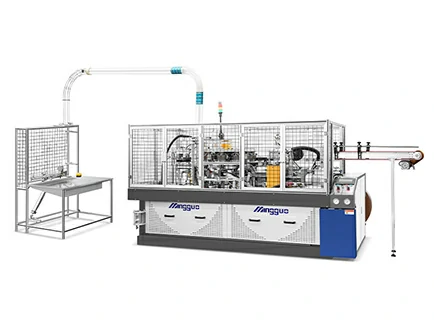
MINGGUO Machinery manufactures automatic paper bowl forming machines designed for reliable, high-performance production. The MG-GB800-F Rectangle Paper Bowl Forming Machine is one of their key models, built with a focus on durability and ease of maintenance. The machine handles paper weights from 190-320 GSM with single or double PE/PLA coated paper, producing 50-60 bowls per minute. It supports bowl sizes from 4-35oz (100-1000ml) with mold exchangeability, and is suitable for a range of applications including noodle bowls, ice cream containers, and takeaway food packaging.
MINGGUO’s commitment to quality extends beyond the machine itself. They offer comprehensive after-sales support, including installation guidance, operator training, and a one-year warranty on the entire machine. Spare parts and wearing parts are available to keep your line running. For first-time buyers, MINGGUO provides a comprehensive guide covering budgets, materials, ROI, free design consultation, manufacturing, shipping, and installation.
A well-maintained paper bowl machine is a productive paper bowl machine. The daily checks take 15 minutes. The weekly tasks take an hour. The monthly and quarterly work takes a few hours. Compared to the cost of an unexpected breakdown—lost production, rushed repairs, and missed deadlines—that time is a bargain. Start with a simple schedule, assign responsibility, and track your results. With a structured maintenance program, your machine will deliver reliable production for years to come.
Ready to optimize your paper bowl machine maintenance program? Reach out to MINGGUO Machinery’s team—they can provide maintenance guidance, spare parts recommendations, and a copy of the paper bowl machine maintenance log template to help you get started.
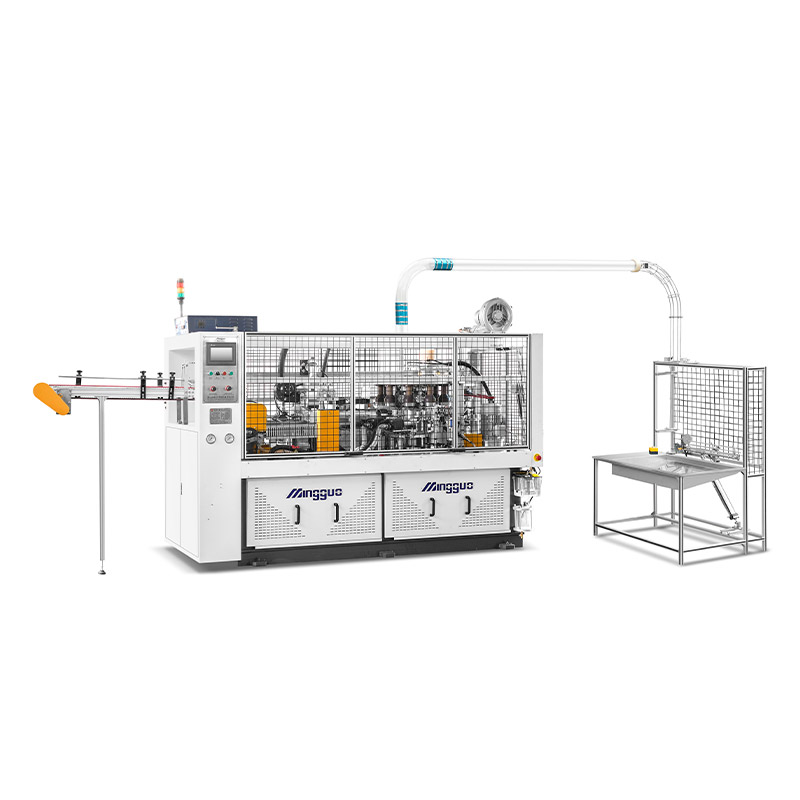
Paper cups specifications:
200 pcs/min
4-16oz(100-450mI) (mold exchangeable)
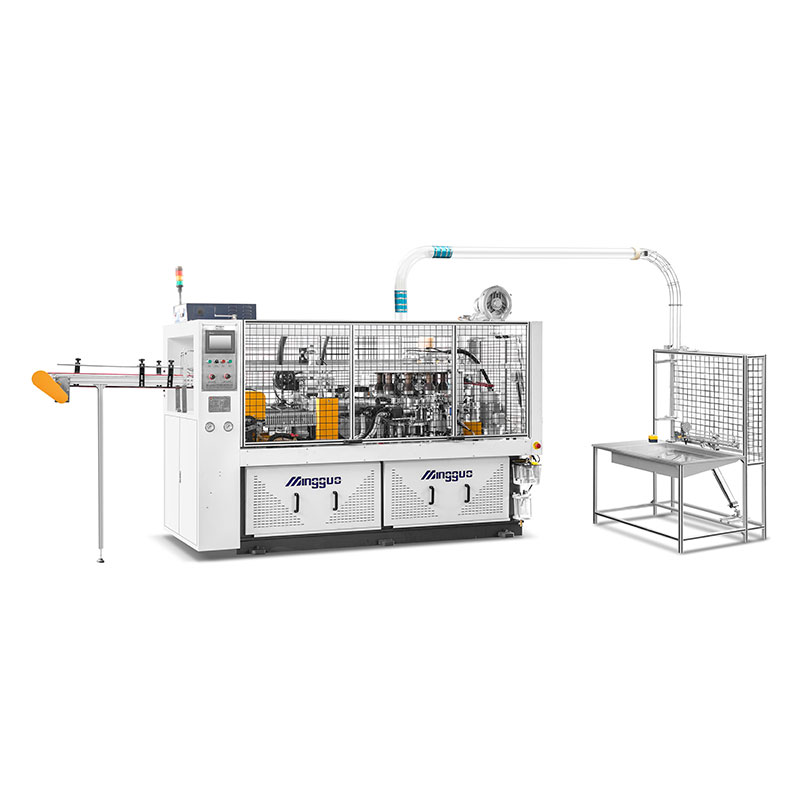
Paper cups specifications:
4-16oz (can be customized by max.26oz)
(100-450ml)(mold exchangeable)
Top:55-105mm
Height:60-135mm
Bottom:55-75mm
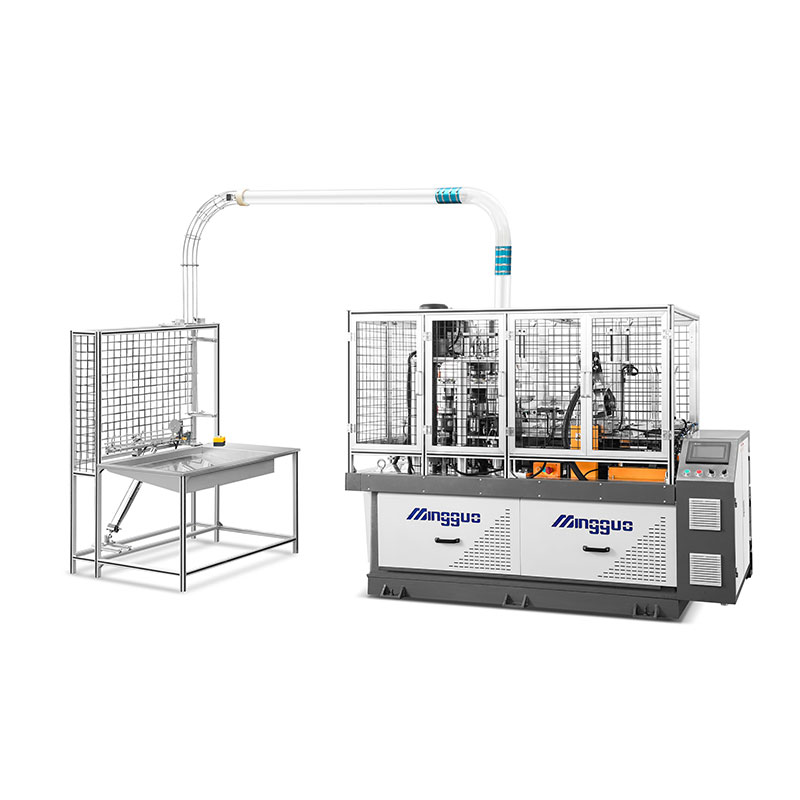
Paper cups specifications:
(100-350ml)(mold exchangeable)
Top: 55-90mm
Height: 60-110mm
Bottom: 40-65mm


