 Español
 Pусский
 عربي
عربي  Bahasa Indonesia
Why Some Cup Formers Jam Every Shift While Others Run for Days
Publish Time:
Author:
Mingguo
Visit: 819

 English

Walk into any bubble tea shop. The cashier grabs a cup, fills it with tapioca and tea, seals it with a lid, and hands it to you. That cup looked ordinary – until you realize it held liquid without leaking, didn’t collapse in your hand, and had a perfectly rolled rim that didn’t cut your lip. A paper cup machine made that cup, along with millions of others, in a fraction of a second.
Not every cup former is the same. Some struggle with thin paper. Others jam when you switch from an 8oz coffee cup to a 16oz bubble tea cup. And some simply can’t keep up with a busy production line. This guide explains how a modern cup line actually works, what features separate a reliable machine from a problem‑prone one, and how to tell if a machine is built for sustained speed – not just brochure numbers.
Every cup line, slow or fast, must do four things. The difference is how reliably and quickly they do them.
The flat paper blank wraps around a mandrel. The overlapping edge must seal permanently. Two methods exist: hot air (melts the PE coating) and ultrasonic welding (high‑frequency vibrations fuse the coating). Ultrasonic is cleaner, faster, and leaves no adhesive residue – essential for high‑speed runs.
A pre‑cut paper disc drops into the tapered cup body. Heat and pressure bond it to the side wall. This seal must be perfect. A weak bottom means a leaking cup – and customer complaints. At high speed, bottom heating must be exceptionally consistent.
The top edge rolls into a smooth, rounded rim. A rough rim feels cheap and can cut lips. Curling also adds stiffness to the cup opening, making it more comfortable to drink from. High‑speed curling requires precise mechanical timing.
Finished cups release cleanly without sticking to the mandrel, then stack automatically for packing. Good ejection means less manual handling and fewer deformed cups. At 100 cups per minute, any sticking will cascade into a pileup.
A machine that runs reliably at high speed isn’t just a scaled‑up slow machine. It requires specific engineering decisions.
| Design feature | What it does | Why it matters |
|---|---|---|
| Three turntables | Parallel processing – one seals, one bottoms, one curls | Reaches 100 cups/min without compromising seal quality |
| Open cam design | Cams are visible and accessible | Maintenance takes hours, not days |
| Intermittent indexing | Stops at each station for sealing and cooling | Consistent bottom seals, fewer leaks |
| Longitudinal axis structure | Keeps alignment at high speed | Prevents drift, reduces rejects |
| Ultrasonic side sealing | Instant bond, no glue, no drying time | Cleaner seams, faster cycles, no adhesive smell |
A paper cup machine (second mention) with these five features will out‑produce a simpler machine by a wide margin.
.jpg)
A well‑designed cup former can switch between these applications without a full‑day changeover:
Milk tea shop – bubble tea cups (wide diameter, sturdy base)
Coffee shop – coffee cups (8‑16oz, double PE for heat)
Fast‑food restaurant – takeaway cups (high speed, consistent stacking)
Catering – fully automatic cups (integration with filling lines)
Medical – leak‑proof cups (sterile, no contamination)
School canteen – eco‑friendly cups (PLA coating, compostable)
Wedding / event – custom printed cups (logo registration, small batch runs)
A paper cup machine that can handle this range without a full‑day changeover is worth its weight in tooling.
If you’ve never bought a cup machine before, you don’t know what you don’t know. A transparent supplier will answer these questions without hesitation.
Many machines claim 120 cups/min but can only hold it for 10 minutes. Ask for an 8‑hour shift record.
If changeover takes half a day, you lose flexibility. Good machines do it in under 30 minutes with servo‑driven adjustments.
A one‑year warranty is standard. But what about remote troubleshooting? Are wearing parts included? Is support 24/7?
A warranty is only as good as the support behind it. Some manufacturers offer a one‑year warranty but charge for every service call. Others include:
Remote control to solve faults – technicians log in and fix software or control issues without a site visit
24/7 fast response – production doesn’t stop for weekends
Free wearing parts before shipment – seal bars, cutting dies, heaters – so you have spares on day one
These are the details that separate a machine that keeps running from one that waits weeks for parts.
The quality of a cup machine is determined long before it reaches your floor. Look for:
In‑house machining centers – critical components made in‑house, not outsourced
Standardized operating procedures – consistent assembly, not one‑off craftsmanship
Advanced ultrasonic bonding – tested for thousands of cycles
Strict quality checks – multiple inspection stages, not just final sign‑off
Experienced technical engineers – people who have built cup machines for years
A paper cup machine built with these processes will arrive ready to run, not needing weeks of debugging.
Compared to European‑built machines
European cup formers are precise, well‑built, and expensive. Lead times of 6‑9 months are common. Asian manufacturers often deliver in 60‑90 days. Both have their place – the choice depends on your timeline and budget.
Compared to low‑cost Asian suppliers
Some suppliers offer very competitive pricing but may lack after‑sales support. Check: do they stock spare parts? Do they offer remote troubleshooting? Is training included?
Compared to used equipment
Used cup machines can be cost‑effective, but you inherit unknown wear on bearings, cams, and heaters. A new machine with a one‑year warranty gives you peace of mind that a used machine cannot.
One manufacturer that has been building cup machines for years is Mingguo Machinery. Their MG‑C600M model uses three turntables, open cam design, intermittent indexing, and ultrasonic sealing – exactly the features described above. They offer a one‑year warranty, 24/7 remote support, and free wearing parts before shipment. For first‑time buyers, they provide a free consultation covering budgets, materials, ROI, design, shipping, and installation.
A paper cup machine that runs 100 cups per minute, switches sizes in minutes, and comes with a one‑year warranty and free wearing parts is a long‑term asset.
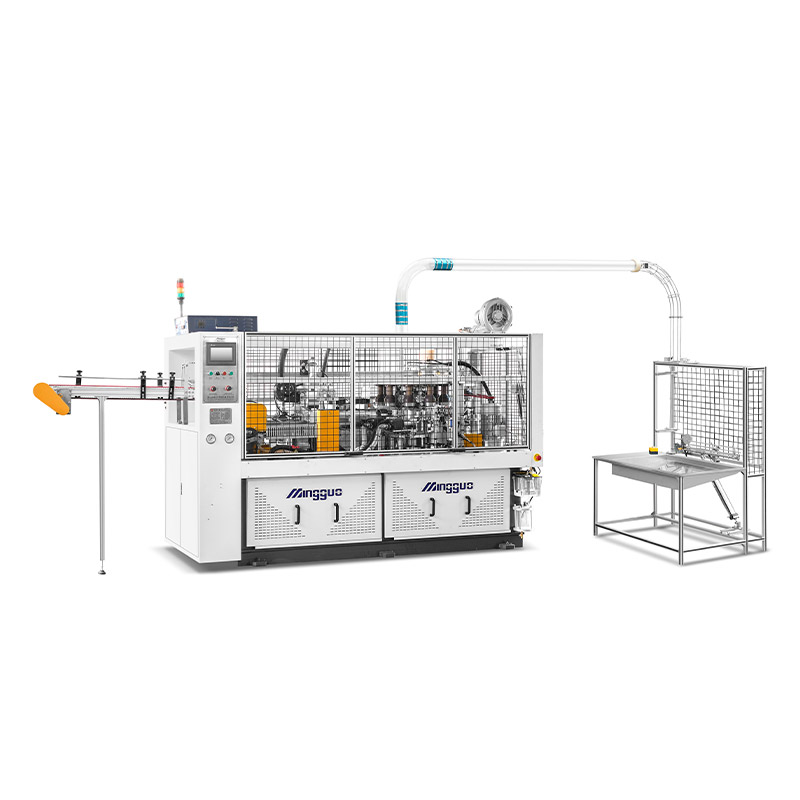
Paper cups specifications:
200 pcs/min
4-16oz(100-450mI) (mold exchangeable)
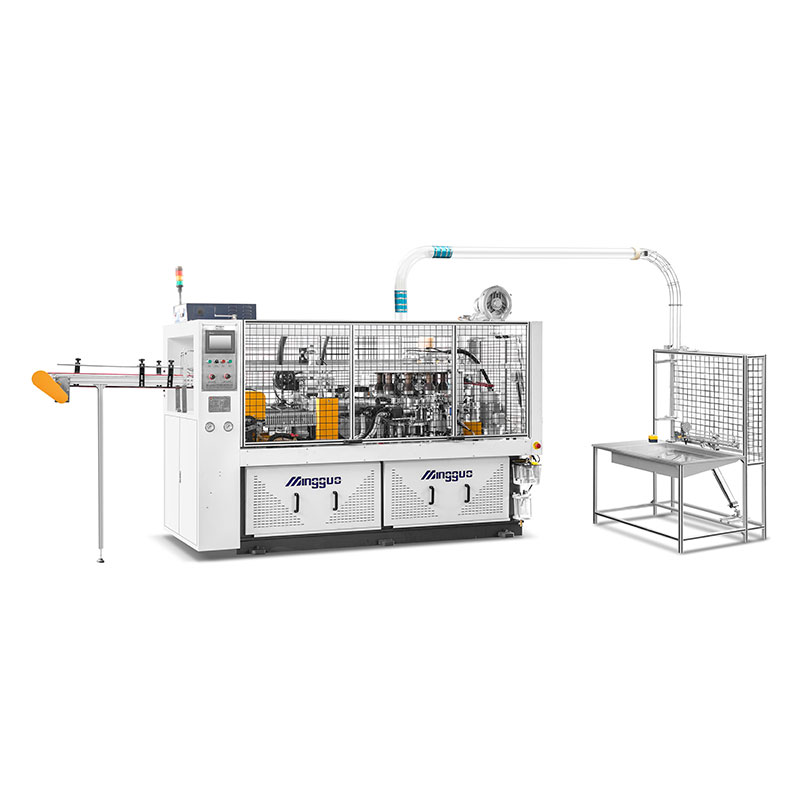
Paper cups specifications:
4-16oz (can be customized by max.26oz)
(100-450ml)(mold exchangeable)
Top:55-105mm
Height:60-135mm
Bottom:55-75mm
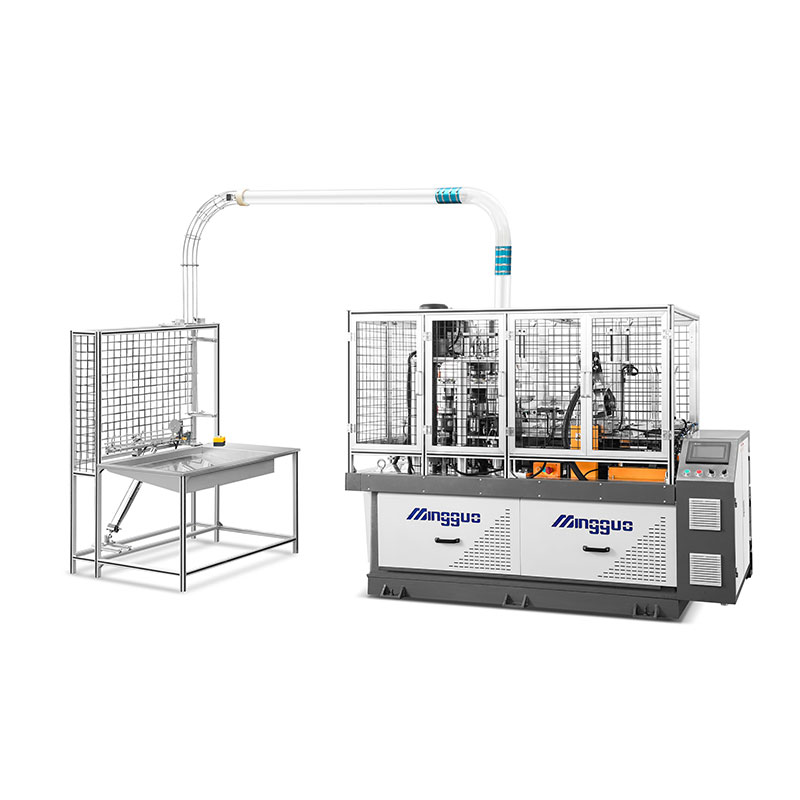
Paper cups specifications:
(100-350ml)(mold exchangeable)
Top: 55-90mm
Height: 60-110mm
Bottom: 40-65mm


