 Español
 Pусский
 عربي
عربي  Bahasa Indonesia
How a Paper Cup Machine Keeps Hot Coffee from Seeping Through
Publish Time:
Author:
Mingguo
Visit: 391

 English

That slightly damp coffee cup in your hand? That’s single‑side PE coating at work – fine until heat from the drink softens the seal and moisture starts sneaking through. Double‑side PE coating fixes the problem by locking liquid inside. But here’s the catch: turning double‑side PE paper into a finished cup is much harder. The material is thicker, stiffer, and demands higher, more consistent heat. A paper cup machine that can handle double‑side PE has to run hotter, hold tighter tolerances, and never drift. This guide breaks down how such a machine works, what features you actually need, and how to spot a line that will still perform years from now.
Single‑side PE is fine for cold cups. Double‑side PE is for hot coffee, soup, and any beverage that needs to stay hot without leaking or softening the cup.
The paper blank is coated with polyethylene on both sides – inside and out. The inside coating seals against the liquid. The outside coating prevents moisture from soaking into the paper from condensation or handling. For a coffee shop, double‑side PE cups feel dry on the outside even after 30 minutes – a noticeable quality difference.
Double‑side PE paper is stiffer and more prone to curling at the edges. The sealing temperature needs to be higher (typically 180‑220°C vs. 150‑180°C for single‑side). And the heat must be applied evenly – any cold spot will leave an unsealed area that leaks. A 5°C variation across the sealing plate can turn a good batch into a leaker.
Hot air sealing works for single‑side PE but struggles with double‑side because the outer coating can melt and stick to the forming mandrel. Ultrasonic welding applies heat precisely at the seam interface, melting both coatings without overheating the surrounding paper. The result is a clean, glue‑free seam that doesn’t leave residue on tooling.
Every cup line does these four jobs. The quality of each step determines whether the cup leaks or holds.
The flat blank wraps around a mandrel. The overlapping edge must seal permanently. Ultrasonic welding is faster, cleaner, and more reliable for double‑side PE paper than hot air. It also eliminates the need for warm‑up time – the machine is ready to run from the first cycle.
A pre‑cut paper disc drops into the tapered cup body. Heat and pressure bond it to the side wall. For double‑side PE, bottom heating must be exceptionally consistent – even a 5°C difference can cause a leak. Machines that use LEISTER‑style heaters with multi‑zone PID control maintain even temperature across the entire sealing plate.
The top edge rolls into a smooth, rounded rim. A rough rim feels cheap and can cut lips. Curling also adds stiffness to the cup opening, making it more comfortable to drink from. For double‑side PE, the thicker paper requires stronger curling pressure – a weak curl will spring back open.
Finished cups release without sticking to the mandrel, then stack automatically. At 100 cups per minute, any sticking will cause a pileup and stop the line. Non‑stick coatings on the mandrels and proper cooling before ejection are essential.
A machine that runs double‑side PE paper reliably isn’t just a standard cup line. It requires specific engineering.
| Feature | What it does | Why it matters for double‑side PE |
|---|---|---|
| Three turntables | Parallel processing – one station seals, one bottoms, one curls | Higher speed without sacrificing sealing time |
| Open cam design | Cams are visible and accessible | Faster maintenance, less downtime |
| Intermittent indexing | Stops at each station for sealing and cooling | Longer dwell time for consistent seals |
| Longitudinal axis structure | Keeps alignment at high speed | Prevents drift that would misalign seals |
| Ultrasonic sealing | Instant bond with no glue | No adhesive smell, no drying time, cleaner seams |
A paper cup machine with these features will handle double‑side PE paper without constant jamming.
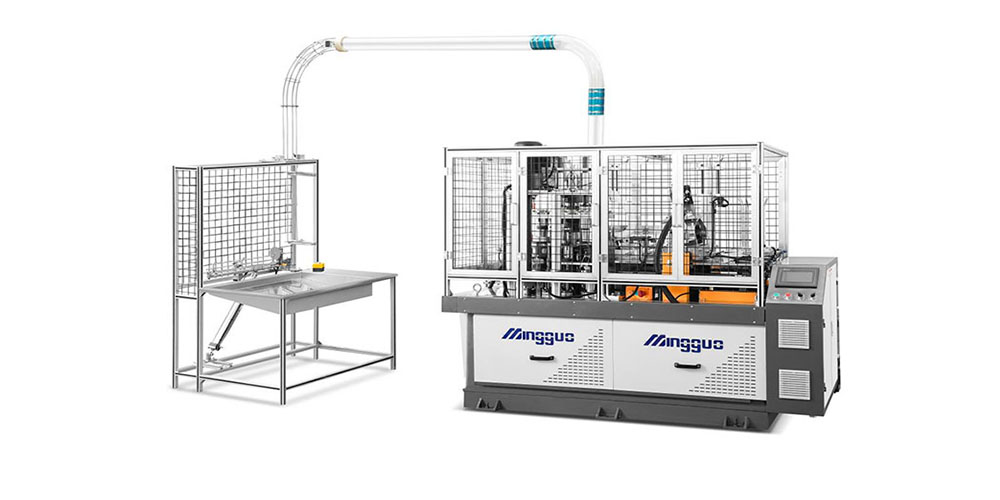
A versatile cup former can switch between these applications without a full‑day changeover:
Hot coffee cups (8‑16oz, double‑side PE, rolled rim) – requires precise temperature control
Bubble tea cups (wide diameter, sturdy base, single or double PE) – needs strong bottom seal
Takeaway soup cups (leak‑proof bottom, double‑side PE) – must pass liquid fill test
Ice cream cups (single‑side PE, low cost, high volume) – runs fastest
Custom printed cups (weddings, events, brand logos) – needs registration accuracy
Eco‑friendly PLA cups (compostable, lower sealing temperature) – requires separate temperature profile
A paper cup machine that can switch between double‑side PE and PLA without retooling is a flexible asset. The ability to store recipes for each cup type saves hours of trial‑and‑error setup.
If you’ve never bought a cup machine, you don’t know what you don’t know. Ask these questions.
Peak speed numbers are often for thin, single‑side paper. Double‑side PE runs slower – ask for real data from an 8‑hour shift.
If changeover takes half a day, you lose flexibility. Good machines do it in under 30 minutes with servo‑driven adjustments and recipe recall.
Does the machine detect and reject bad cups automatically, or do you have to inspect manually? Auto‑reject saves labor and prevents bad cups from reaching your customer.
A one‑year warranty is standard. But is remote troubleshooting included? Are wearing parts supplied free for the first year? Is support available 24/7?
The warranty is only as good as the support behind it. Some manufacturers offer a one‑year warranty but charge for every service call. Others include:
Remote control to solve faults – technicians log in and fix software or control issues without a site visit
24/7 fast response – production doesn’t stop for weekends
Free wearing parts before shipment – seal bars, cutting dies, heaters – so you have spares on day one
On‑site training – until your operators can run the machine independently
These details separate a machine that keeps running from one that waits weeks for parts.
A cup machine’s price tag is only the beginning. Here’s what else to budget for.
| Cost category | Annual estimate (two shifts) | Notes |
|---|---|---|
| Energy (13‑18 kW) | $3,000‑$5,000 | Depends on local electricity rates |
| Wearing parts (seal bars, cutters) | $1,500‑$3,000 | Higher for double‑side PE (more wear) |
| Maintenance labor | $2,000‑$4,000 | Regular cleaning and adjustments |
| Training (first year) | $1,000‑$2,000 | Often included with purchase |
A machine with efficient drive systems and well‑designed sealing bars can reduce these costs by 20‑30%.
One manufacturer that has been building cup machines for years is Mingguo Machinery. Their MG‑C600M model uses three turntables, open cam design, intermittent indexing, and ultrasonic sealing – exactly the features described above. They offer a one‑year warranty, 24/7 remote support, and free wearing parts before shipment. For first‑time buyers, they provide a free consultation covering budgets, materials, ROI, design, shipping, and installation.
The machine is designed to handle double‑side PE paper, single‑side PE, and PLA coatings. It runs at a sustained 100 cups per minute, switches sizes in under 30 minutes, and comes with a spare parts kit.
A paper cup machine that runs double‑side PE paper at sustained speed, switches sizes in minutes, and comes with a one‑year warranty is a long‑term investment.
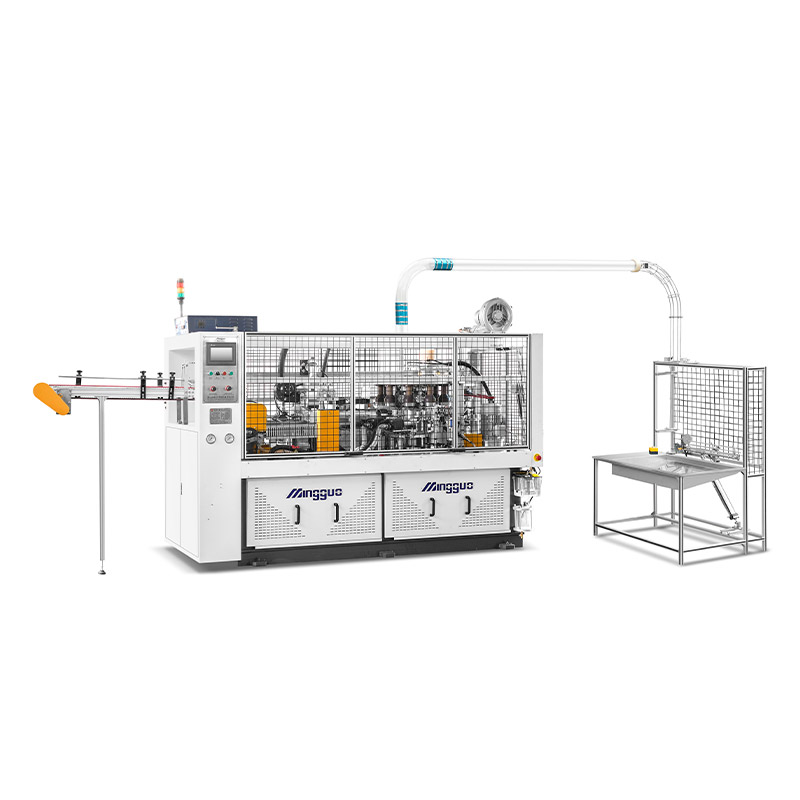
Paper cups specifications:
200 pcs/min
4-16oz(100-450mI) (mold exchangeable)
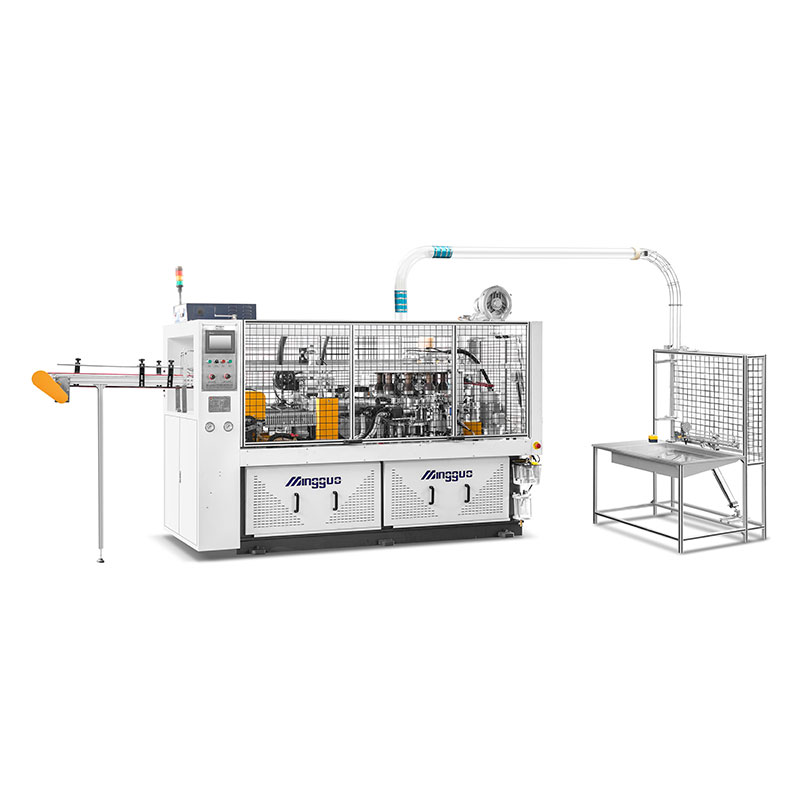
Paper cups specifications:
4-16oz (can be customized by max.26oz)
(100-450ml)(mold exchangeable)
Top:55-105mm
Height:60-135mm
Bottom:55-75mm
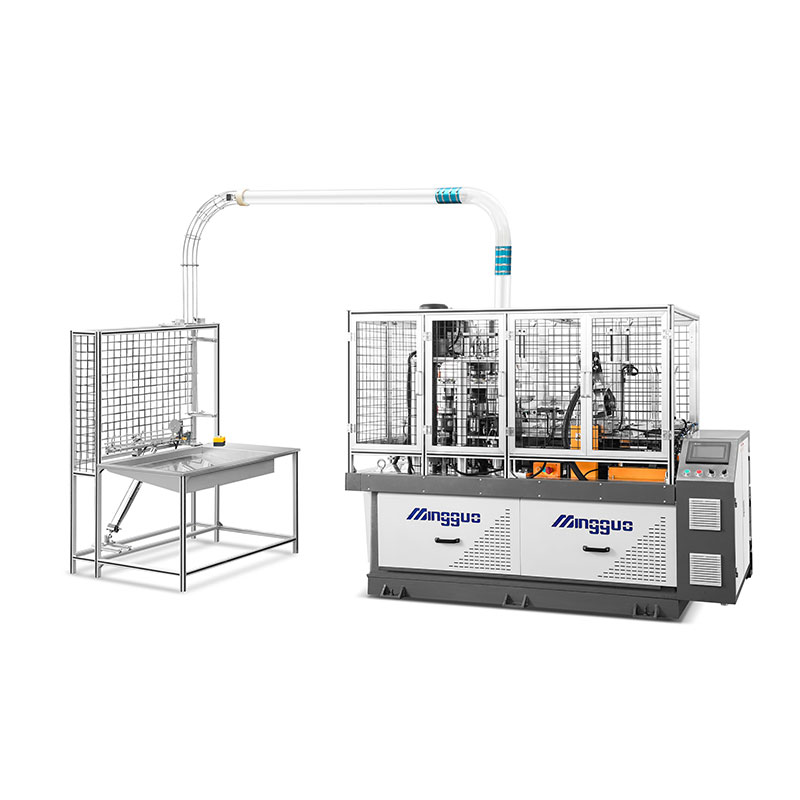
Paper cups specifications:
(100-350ml)(mold exchangeable)
Top: 55-90mm
Height: 60-110mm
Bottom: 40-65mm


