
 English
 Español
 Pусский
 عربي
عربي Your shift chart says 65 bowls per minute. The stack at the end of the shift says 35. Where did the other 30 go?
Publish Time:
Author:
Mingguo
Visit: 299

You load a fresh paper roll. The counter clicks past 2,000 bowls by mid‑morning. Then a mis‑fed blank wedges the forming turret. Twelve minutes to clear it. An hour later, the stacker fills unevenly and trips. Another eight minutes gone. At shift end, the machine log shows peak speed 65 bowls per minute, but the actual floor stack says you averaged under 40.
That gap between brochure speed and real output is where unreliable drive systems, poor jam access, and unpredictable sealing eat your margin. A paper bowl machine that runs 65 but jams every 15 minutes delivers less usable product than a slower machine that stays running.
Take the MG‑B600 from Mingguo. It handles 20‑35oz bowls (500‑1000ml) on 150‑350 GSM coated paper. Instead of chain drive, it uses helical gears. Instead of heat sealing, it uses ultrasonic. And instead of manual lube points, it sprays oil automatically. Those three choices cut the kinds of stops that turn a 65‑bowl machine into a 35‑bowl machine.
A bowl machine runs a sequence. Feed the paper fan. Seal the side seam. Insert the bottom disc. Bond it. Curl the rim. Eject. Stack. If any station gets half a degree out of sync, the bowl arrives at the stacker crooked, and the stacker jams.
Chain‑driven machines accumulate slack. After 5,000 hours, a timing chain can stretch 2‑3mm. That’s enough to shift the paper feed registration by several millimeters – crooked seams, half‑formed bowls, and a stacker that stops every few hundred cycles.
The MG‑B600 uses helical gear transmission instead. Gears don’t stretch. After three times the hours, the timing still holds factory spec. The open cam design lets you see each cam follower without removing guards, so you spot a worn part before it jams a station. On a 35oz bowl (1000ml), the tooling is heavy. Chain drives under that load wear faster. Gears don’t care about bowl weight – changeover from 20oz to 35oz doesn’t require re‑timing.
Shorter turret travel between stations means less time moving, more time forming. The MG‑B600’s low‑stroke design cuts index time by about 15‑20% compared to older machines. That’s why it hits 65 bowls per minute on 20oz stock and still holds 50 on the heaviest 35oz material.
A paper bowl fails in one of two places: the side seam where the fan ends meet, or the bottom seal where the disc attaches.
Heat sealing pushes heat from outside the paper inward. The outer PE layer melts fine, but the inner layer may not reach full bonding temperature. Ultrasonic sealing generates friction at the interface between the two layers. Both melt simultaneously. On double PE coated paper, that means the inside and outside seals are equally strong, with less heat bleeding into the paper fibers to weaken the rim.
Here’s the real test: fill a bowl with 80°C soup, let it sit fifteen minutes, then squeeze the side seam. If it separates, your sealing method isn’t right for the material. The MG‑B600’s ultrasonic setup produces seams that survive that soak – which matters when your customer microwaves the bowl for another minute.
| Paper Type | Sealing Method | Seal Strength | Best Use |
|---|---|---|---|
| Single PE (150‑250 GSM) | Ultrasonic | Consistent | Ice cream, cold salads, light soup |
| Double PE (250‑350 GSM) | Heat or ultrasonic | Ultrasonic better | Hot soups, noodles, oily foods |
| Uncoated kraft | Not suitable | — | No water barrier |
The MG‑B600 takes 150‑350 GSM paperboard, single or double PE. Light stock (150‑200 GSM) runs fastest – less mass, less sealing time. But a 35oz bowl of hot soup made from 150 GSM paper will soften and collapse before the customer finishes eating.
Heavy stock (300‑350 GSM double PE) gives you a rigid bowl that resists heat and oil. Slower output – about 50 bowls per minute on max thickness – because the ultrasonic sealer needs longer dwell to fully melt the thicker coating.
The bowl size range covers the common takeaway volumes: 20oz noodles, 24oz ramen, 26oz pho, 32oz family size, 35oz large portions. Top diameters from 55mm to 150mm handle both tall narrow cups (beverages) and wide shallow bowls (salads, entrees).
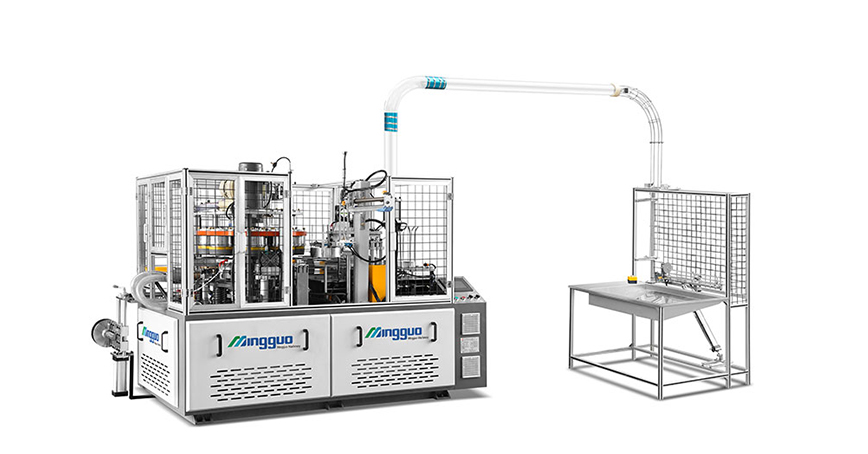
A chain drive is cheap until it isn’t. After 5,000 running hours, a typical timing chain has elongated 0.5‑1%. On a machine indexing 65 bowls per minute, that drift shifts the feed–seal alignment by millimeters. The result is crooked side seams, rounded bowl shapes, and a stacker that jams every few minutes.
The MG‑B600’s helical gear transmission doesn’t elongate. After 20,000 hours, the timing is still where the factory set it. Maintenance becomes inspection, not replacement.
That transmission is paired with an automatic spray oil lubrication system. The controller spits measured oil pulses at timed intervals – no operator remembering to grease cam followers before a shift. Human error – forgetting to lube a bearing – causes a surprising percentage of cam follower failures. The automatic system eliminates that variable.
Skip the demo with perfect paper on a clean machine. Bring your worst roll – the one with bent edges, static cling, the stock that always gives you trouble. Run it at full speed. Watch where the first jam happens. On most machines, it’s the feed station – the paper fan lifts unevenly, the suction cup misses the blank.
Time the jam clearance. On the MG‑B600, open cam design means you reach the jam without tools, usually under two minutes. On a chain‑driven machine with enclosed guards, that same jam costs fifteen minutes of wrenching.
Then test the seals the hard way. Run fifty bowls, fill five with 80°C water for fifteen minutes, squeeze the side seam. If it separates, the ultrasonic parameters aren’t right for that material. A properly tuned paper bowl machine survives that soak. If yours doesn’t, you’re shipping bowls that will leak in a microwave.
Finally, let the machine run unattended for an hour at 65 bowls per minute. Count how many times the stacker binds. Each jam costs 3‑4 minutes – 200‑260 lost bowls per event. A helical gear drive with proper indexing timing should run a full shift without a single stacker jam. If the machine you’re testing can’t do that, the speed number on the brochure is fiction.
Mingguo Machinery has built paper container forming equipment since before 2015, with about 150 employees in a 20,000‑square‑meter plant in Ruian, Zhejiang. The MG‑B600 is their upgraded single‑turntable bowl machine, between entry‑level lines and higher‑speed double‑turret systems.
The same base machine can be tooled for cups or bowls with mold changes. That means you can run 20‑35oz bowls on one shift and switch to cups on the next – useful if your seasonal demand shifts from iced drinks in summer (cups) to hot soups in winter (bowls). Power draw is 8.5KW at full load on 380V 50Hz. Dimensions 2450×1500×1900mm, weight 3000kg. CE certified, SGS/BV verified.
A paper bowl machine that actually delivers its rated speed across a shift needs three things: helical gears to keep timing steady, ultrasonic sealing to bond heavy paper, and automatic lube to eliminate missed greasing. Changeover between 20oz and 35oz takes under 20 minutes with the exchangeable mold system. And when a jam happens – they always happen – the open cam design gets you back running in minutes, not hours.
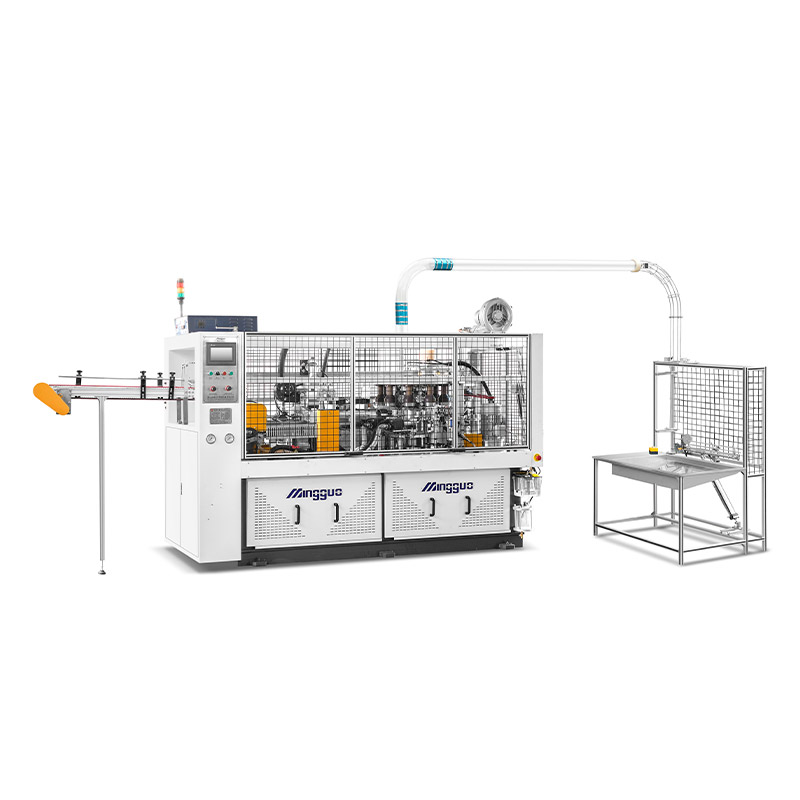
Paper cups specifications:
200 pcs/min
4-16oz(100-450mI) (mold exchangeable)
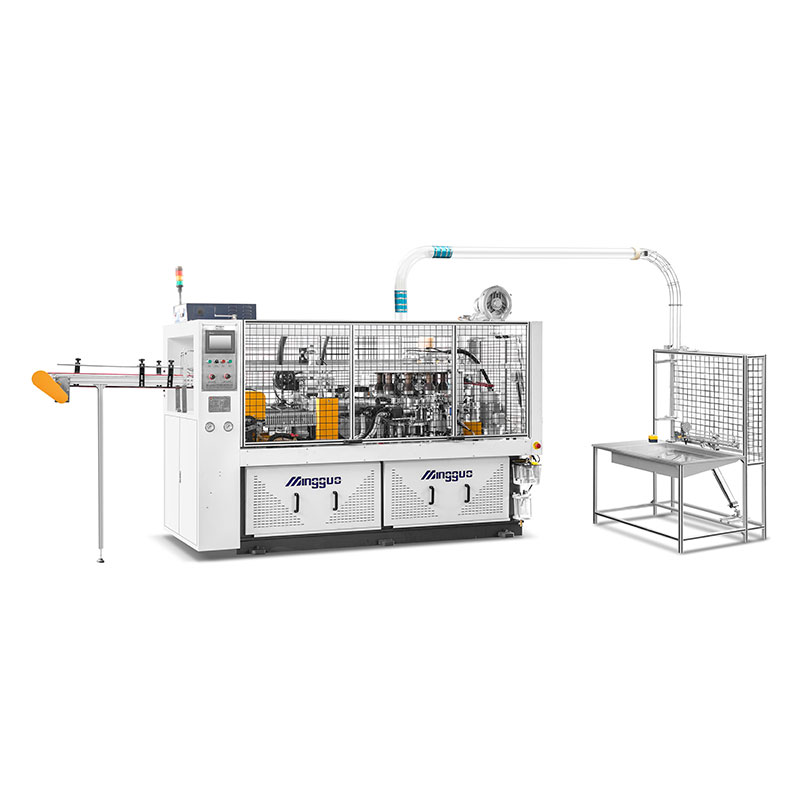
Paper cups specifications:
4-16oz (can be customized by max.26oz)
(100-450ml)(mold exchangeable)
Top:55-105mm
Height:60-135mm
Bottom:55-75mm
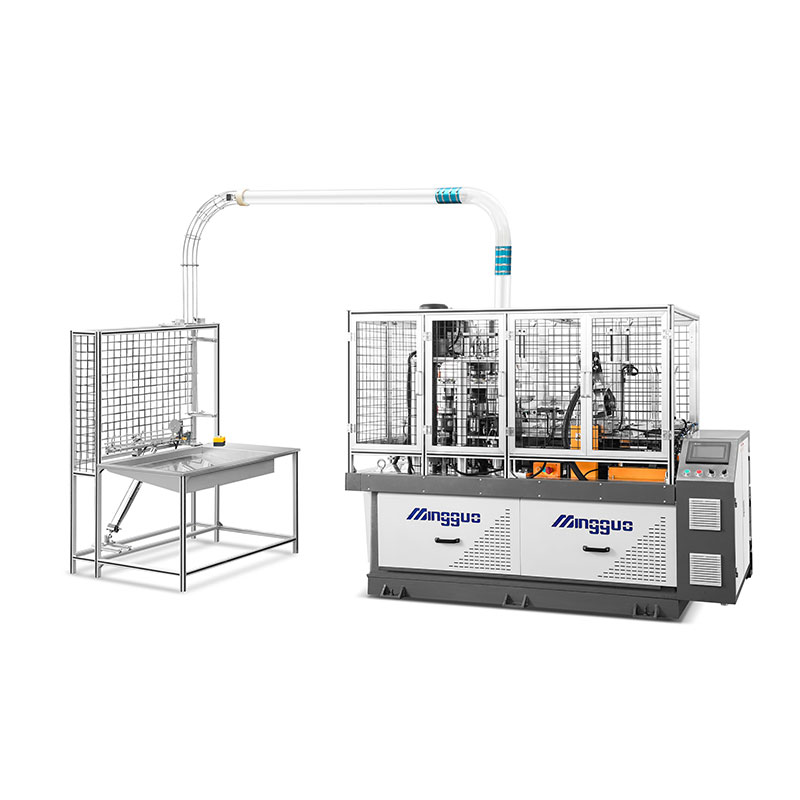
Paper cups specifications:
(100-350ml)(mold exchangeable)
Top: 55-90mm
Height: 60-110mm
Bottom: 40-65mm


