 Español
 Pусский
 عربي
عربي  Bahasa Indonesia
Why Is a Paper Bucket Machine Not Just a Bigger Paper Cup Machine?
Publish Time:
Author:
Mingguo
Visit: 1457

 English

Step into any ice cream shop or deli. Those paper buckets holding a pint of gelato or a quart of hot soup aren’t oversized cups. They’re a different product entirely – wider bottoms, stiffer sidewalls, wire handles, and a critical demand for leak‑proof seals. A machine that makes cups can’t simply be scaled up to make buckets. The paper is heavier (300‑450 GSM), the bottom sealing area is larger, and the rim must be curled to accept a lid. This guide walks you through the five key differences, the sealing technologies that prevent leaks, and the specifications that matter when you’re buying a paper bucket line.
Making a paper bucket isn’t just about using a bigger mold. Here are the engineering hurdles that separate a bucket machine from a cup machine.
A cup tapers to a small bottom. A bucket’s bottom can be 70‑120mm across. That larger surface area requires even heat distribution. If the heating plate has cold spots – even 5°C cooler – the bottom seal will leak. Good bucket machines use multi‑zone temperature control with independent sensors and heaters to maintain uniformity across the entire plate. Some advanced systems also include pressure profiling to ensure the bottom disc is pressed evenly.
Cup paper is 190‑320 GSM. Bucket paper runs from 300 to 450 GSM. Thicker paper needs higher sealing temperatures (typically 180‑220°C vs. 150‑180°C for cups) and stronger forming pressure. The machine’s frame must be rigid enough to handle the extra force without flexing. A flimsy frame will lead to misaligned bottom seals and inconsistent side seams over time.
For soup or ice cream (which melts into liquid), the side seam must be 100% liquid‑tight. Ultrasonic welding creates a molecular bond without glue – far more reliable than hot air for wet contents. The ultrasonic horn must be precisely tuned to the paper thickness; otherwise, the seam may be over‑welded (brittle) or under‑welded (leaky).
A curled rim adds rigidity and provides a surface for snap‑on lids. The curling station must handle heavier paper without cracking. If the rim is not perfectly round, the lid won’t seal. Some machines use a two‑stage curling process: pre‑curl then final curl.
Many buckets have a wire handle. The machine must punch holes and insert the handle – an extra station not found on cup formers. The handle wire gauge (typically 1.5‑2.5mm) and the hole placement must be precise. Misaligned holes cause handles to pull out.
A paper bucket machine that addresses all five challenges will produce buckets that survive a hot soup delivery.
Here is the one table you need to evaluate a paper bucket line. All other specs derive from these values.
| Parameter | Typical range | Why it matters for your business |
|---|---|---|
| Production speed | 40‑60 pcs/min | At 50 pcs/min, one shift = 24,000 buckets. Two shifts = 48,000/day. |
| Paper weight | 300‑450 GSM | Heavier paper = stiffer bucket, but slower speed and higher energy cost. |
| Coating | Single/double PE or PLA | Double PE for hot/oily; PLA for compostable. |
| Bottom sealing | Even‑heat system (±2°C) | Prevents leaks – the #1 complaint in liquid packaging. |
| Side sealing | Ultrasonic (preferred) | No glue, no drying time, stronger seam than hot air. |
| Handle attachment | Optional station | Required for retail buckets (ice cream, takeout). |
A paper bucket machine running at 50 pcs/min on 350 GSM paper with ultrasonic sealing and even bottom heat will produce ice cream buckets that stay dry on the outside.
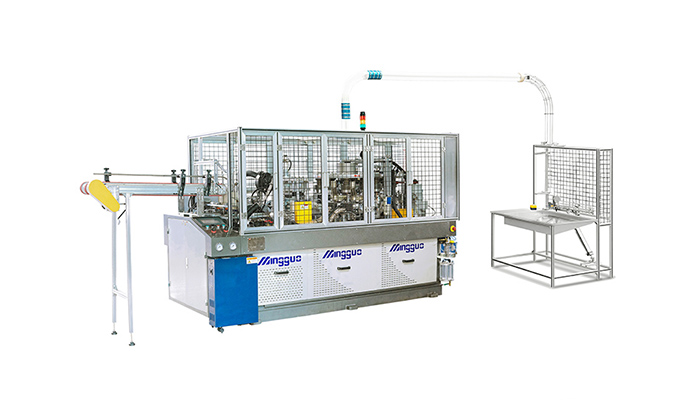
Most cup lines use hot air. For buckets that will hold liquids, that’s a risk.
Hot air nozzles blow 300‑400°C air onto the paper edge just before folding. The PE coating melts, and pressure bonds it. It’s simple and cheap. But if the air temperature fluctuates – due to clogged nozzles or inconsistent airflow – the seal is weak. For a bucket of hot soup, that weak seal can open in transit. Also, hot air sealing is slower because the air must preheat the paper.
High‑frequency vibrations (20‑40 kHz) create friction heat directly at the interface. The coating melts in milliseconds. No preheating, no glue residue, no drying time. The bond is as strong as the base paper. For buckets that will hold ice cream (which melts) or hot soup, ultrasonic is the safer choice. The only downside is higher initial equipment cost, but the reduced reject rate quickly pays for it.
The bottom disc is inserted, then pressed against a heated plate. If that plate has a cold spot – even 5°C lower – that spot will leak. Good machines use LEISTER‑style heaters with multi‑zone PID control to keep the entire surface within ±2°C. Some manufacturers also use infrared preheating of the bottom disc before insertion.
Not every bucket needs 450 GSM paper. Here’s how to choose.
Examples: Flour, nuts, dry pasta, cold salads (no liquid)
Advantages: Faster speed (55‑60 pcs/min), lower energy cost
Sealing: Single PE coating sufficient
Typical bucket size: 16‑32 oz
Examples: Ice cream, frozen yogurt, coleslaw, potato salad
Advantages: Good rigidity, still runs 50‑55 pcs/min
Sealing: Double PE recommended for ice cream condensation
Typical bucket size: 32‑64 oz
Examples: Hot soup, stew, chili, fried chicken
Advantages: Sturdy, won’t collapse
Sealing: Double PE or PLA; ultrasonic side welding mandatory
Typical bucket size: 16‑32 oz (soup) or 64‑128 oz (bulk)
A paper bucket machine with adjustable sealing parameters can handle the full range.
Buying the machine is only half the story. You also need support.
Mingguo sends technicians to your factory to level the machine, align the stations, and run the first production test. Installation takes 3‑5 days depending on site preparation. The technicians also verify that all safety guards are in place and that the electrical connections meet local codes.
Your operators learn to change molds, adjust temperature, tension film, and clear jams. Training continues until they can run a full shift without supervision. Typically, two days of hands‑on training are sufficient for experienced machine operators.
The first‑year kit includes sealing bars, cutting dies, heater cartridges, and drive belts – all wearing parts. After the first year, you order replacements as needed. Mingguo stocks parts for at least 10 years after the machine model is discontinued.
| Business type | Typical product | Annual volume (estimate) |
|---|---|---|
| Ice cream manufacturer | Pint‑size ice cream | 500,000‑2 million units |
| Deli / food service supplier | Soup, chili, mac & cheese | 200,000‑1 million units |
| Catering company | Side dishes, prepared meals | 100,000‑500,000 units |
| Dry goods packer | Flour, breadcrumbs, nuts | 300,000‑1 million units |
| Sustainable packaging brand | Compostable takeout containers | 50,000‑200,000 units |
Every bucket size, paper type, and output target is different. Mingguo can provide a custom quote with the exact specifications you need – handle or no handle, ultrasonic or hot air, PLA or PE coating. Ask for a video demo running your actual bucket size and paper.
A paper bucket machine that combines ultrasonic side welding, even bottom heating, and a rigid frame will run reliably for years.
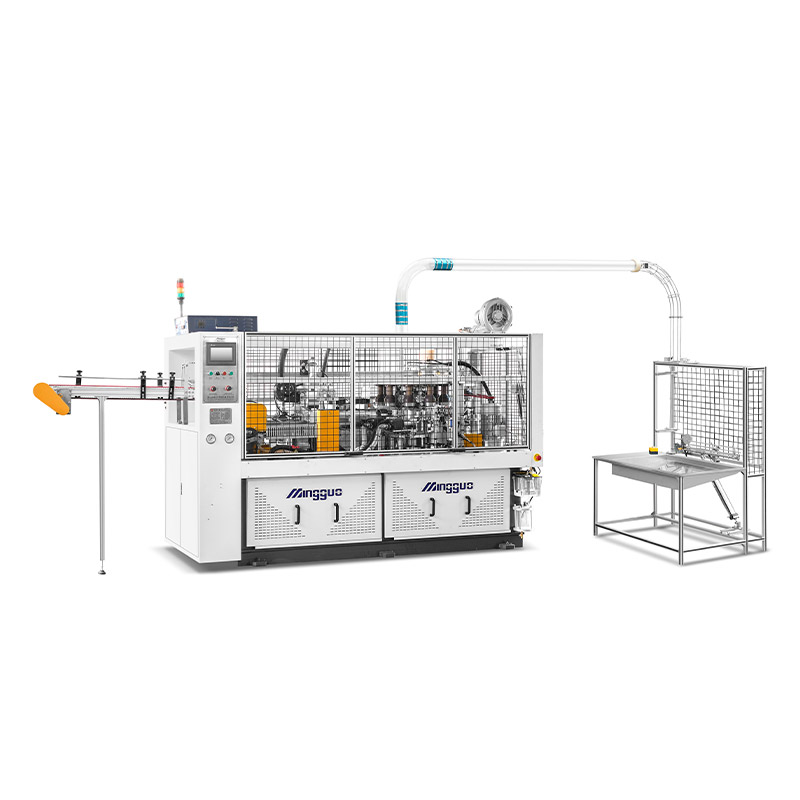
Paper cups specifications:
200 pcs/min
4-16oz(100-450mI) (mold exchangeable)
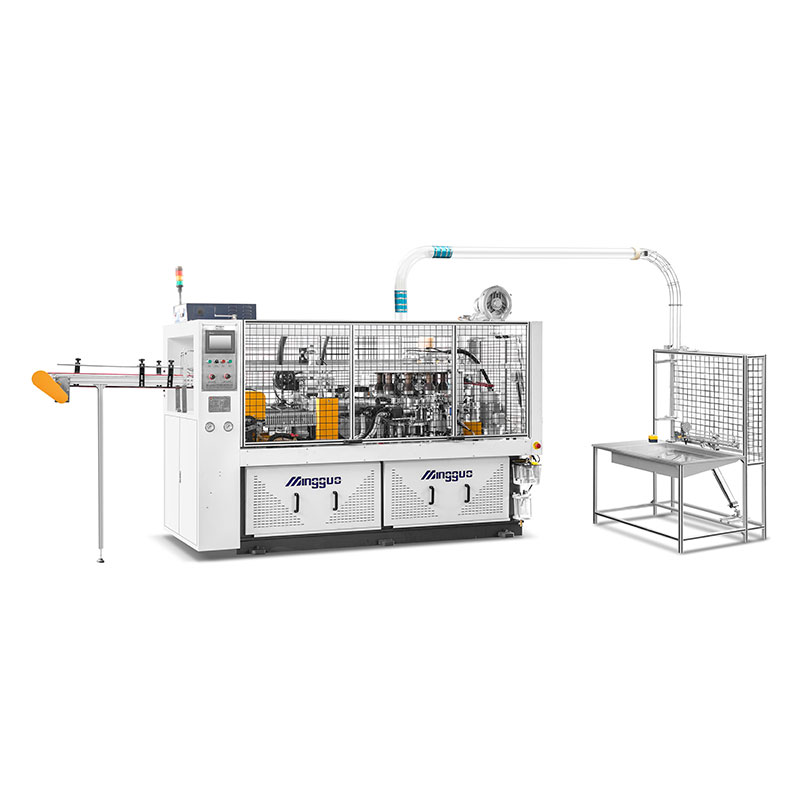
Paper cups specifications:
4-16oz (can be customized by max.26oz)
(100-450ml)(mold exchangeable)
Top:55-105mm
Height:60-135mm
Bottom:55-75mm
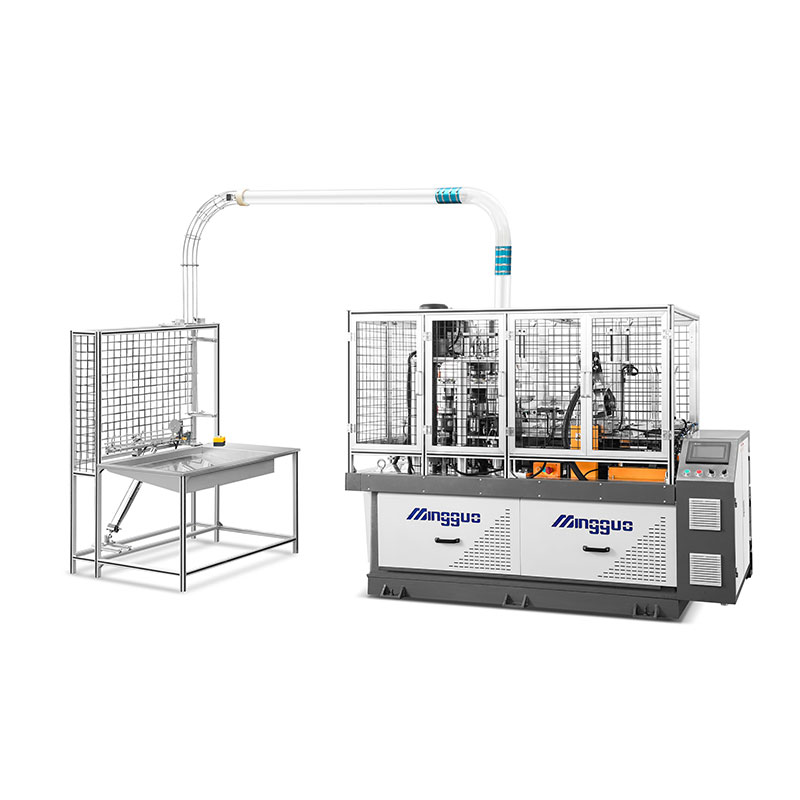
Paper cups specifications:
(100-350ml)(mold exchangeable)
Top: 55-90mm
Height: 60-110mm
Bottom: 40-65mm


