 Español
 Pусский
 عربي
عربي  Bahasa Indonesia
Rectangle Bowls Are Everywhere – But Forming Them Reliably Takes a Special Paper Bowl Machine
Publish Time:
Author:
Mingguo
Visit: 2804

 English

You’ve seen rectangle paper bowls at food stalls, hotel buffets, and takeout counters. They hold noodles, salads, even drinks with lids. Unlike round bowls, rectangle shapes stack tighter, store flatter, and look more modern on a table. But making a rectangle bowl is harder than a round one. Corners need extra sealing, and the forming process is more complex. That’s why a dedicated paper bowl machine for rectangle shapes differs from a standard cup former. This guide walks through the forming process, key specifications, applications, and how one manufacturer builds a reliable rectangle bowl line.
The process is similar to round bowls but with a critical difference: four corners must be sealed without leaking. Here are the steps.
Flat paper blanks (190–320 GSM, single or double PE/PLA coated) feed into the machine. Preheating softens the coating for better sealing. Consistent preheat temperature is essential; too cold, the coating won’t bond; too hot, the paper distorts.
The heated blank is pressed into a rectangular mold. The corners are folded and sealed under pressure. This step is the most challenging – uneven corners leak. A well‑designed paper bowl machine uses precisely matched mold geometry and controlled pressure distribution.
Heat and pressure bond the overlapping layers. For rectangle bowls, the sealing area is larger than round ones, requiring consistent temperature across the whole surface. Uneven heating creates weak spots that burst when filled with hot soup.
Some rectangle bowls have a curled rim for stiffness. Others have a straight rim for lid sealing. The choice depends on the application – curled rims feel nicer for dining in, while straight rims seal better for takeout.
Finished bowls stack automatically. Rectangle bowls stack more compactly than round ones, saving shipping space. A good stacking system also prevents jams and miscounts.
-1351.jpg)
One manufacturer, Mingguo, offers the MG‑GB800‑F model for rectangle paper bowls. The table below shows its main parameters.
| Parameter | Value |
|---|---|
| Production speed | 50–60 pieces per minute |
| Paper weight range | 190–320 GSM |
| Coating types | Single or double PE / PLA |
| Power supply | 220V / 380V 50Hz 3‑phase |
| Average power consumption | 13 kW |
Unlike round bowls, where heat distributes naturally around a curve, rectangle bowls have flat walls and sharp corners. These corners are thermal stress points. If the heating elements are even 5°C cooler at the corners, the seal will be weaker. The MG‑GB800‑F uses LEISTER‑style heating elements that maintain uniform temperature across the entire sealing plate. That’s why corner leaks are rare on this machine.
At 50 bowls per minute, a single shift (8 hours) produces 24,000 bowls. Two shifts: 48,000. That’s enough for a regional food packaging supplier. For a growing business, this output provides a solid foundation.
190–320 GSM covers most food service needs – from lightweight salad bowls to sturdy soup containers. Single or double PE/PLA coating allows for hot or cold contents, including oily foods. PLA (polylactic acid) is derived from renewable resources like corn starch and is compostable in industrial facilities. If your customers demand eco‑friendly packaging, PLA‑coated paper is the way to go.
You’ll find them in more places than you might expect:
Public events – concerts, festivals, sporting events (easy to carry, stack)
Hotels and restaurants – buffet lines, room service, takeout
Cafes and coffee shops – soup of the day, oatmeal, dessert bowls
Food stalls and street vendors – noodles, rice bowls, snacks
Beverage serving – smoothies, iced coffee, bubble tea (with dome lids)
Rectangle bowls are also popular for meal prep services because they fit neatly into refrigerator shelves. For airline catering, rectangle shapes maximize tray space. Even pet food companies have started using rectangle bowls for single‑serve wet food portions.
Round bowls are classic. But rectangle shapes offer practical advantages that drive demand:
Better stacking – no wasted space between bowls, so shipping costs drop.
Easier packing – rectangle cartons fit rectangle bowls perfectly.
Modern look – restaurants use them to differentiate their brand.
Lid compatibility – many rectangle lids seal tighter than round ones.
In addition, rectangle bowls are less likely to spin on a conveyor belt during filling, which reduces spillage. They also present a larger flat surface for branding and labeling – a big plus for takeout packaging.
For a paper bowl machine that handles rectangle shapes, the MG‑GB800‑F was designed specifically for this growing market.
Mingguo is well known for paper cup and bowl forming equipment. Their MG‑GB800‑F is engineered specifically for rectangle paper bowls, running at 50–60 pieces per minute on 190–320 GSM coated paper.
What buyers appreciate:
Versatile sizing – can be customized for different bowl dimensions.
Eco‑friendly output – bowls made with PLA coating are biodegradable and compostable.
Hygienic design – sealed surfaces prevent liquid absorption, so bowls don’t become soggy.
Durable construction – lightweight but strong enough for hot soups and heavy toppings.
The finished product can be fully customized – size, shape, printing, and even lid design. If you already run round cups or bowls, adding a rectangle line opens new customer segments: salad suppliers, meal prep services, and upscale takeout restaurants.
Let’s put those 50‑60 bowls per minute into perspective. Many small‑to‑medium food packaging businesses run two shifts. At 50 bowls per minute with 90% uptime (allowing for paper changes and cleaning), a two‑shift day produces roughly 43,000 bowls. That’s over 1.2 million bowls per month – enough to supply a dozen bubble tea shops or a regional chain of delis.
The machine’s 13 kW power consumption is modest for its output. Compared to older, slower machines that might use 10 kW to produce half the bowls, the MG‑GB800‑F is significantly more energy‑efficient per bowl.
If you run multiple bowl sizes – say, a 16oz noodle bowl and a 24oz salad bowl – you need quick changeovers. The MG‑GB800‑F uses interchangeable molds and adjustable forming stations. An experienced operator can switch sizes in about 30 minutes. Mingguo provides a spare parts kit with the machine, including extra wearing parts, so you’re not waiting for shipments to resume production.
Like any forming machine, the MG‑GB800‑F has wearing parts: sealing plates, cutting dies, and drive belts. Mingguo stocks these and ships them within days. Many buyers order a spare parts bundle with the machine, which includes enough consumables for 12 months of two‑shift operation. This foresight eliminates unexpected downtime.
Let’s do a rough payback estimate for a typical buyer. Assume you sell rectangle bowls at $0.10 each (wholesale). At 50 bowls per minute with 90% uptime, two shifts produce 43,000 bowls per day. That’s $4,300 in daily revenue. Over 22 working days: $94,600 per month.
The MG‑GB800‑F costs a fraction of that monthly revenue. Even accounting for paper, labor, and overhead, the machine often pays for itself within 3‑6 months for a moderately busy operation. If you already have a customer waiting for rectangle bowls, the payback can be even faster.
If you already make round cups or bowls, adding a rectangle bowl machine is a natural expansion. The customer base overlaps – the same restaurants that buy your round cups often need rectangle bowls for different menu items. But rectangle bowls also open entirely new channels:
Meal prep subscription services – they prefer rectangle containers for efficient fridge packing.
Salad bars and delis – rectangle bowls present better for cold dishes.
Ice cream and dessert shops – rectangle bowls with clear lids are popular for takeaway.
Mingguo can send you a video of the MG‑GB800‑F running rectangle bowls in your target size. They can also discuss mold options, printing integration (for custom logos), and lead times.
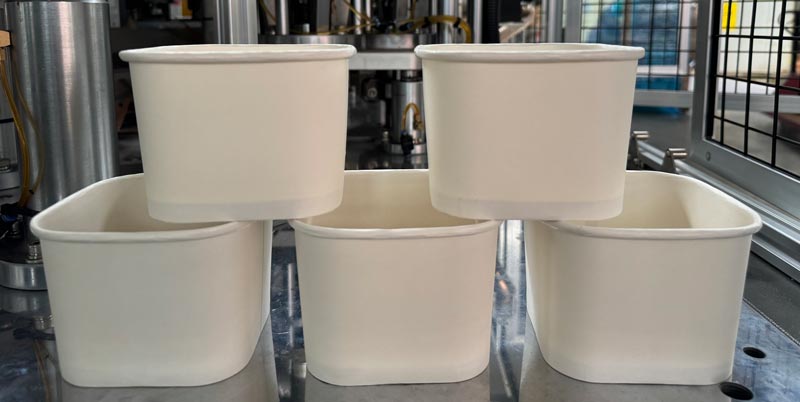
You don’t have to guess how the MG‑GB800‑F performs. Ask Mingguo for a live video demo running your bowl size, or request a factory visit. They’ll show you the seal quality, the changeover speed, and the sustained output. A paper bowl machine that delivers consistent corner seals is the difference between a reliable product and a leaky disaster.
For a complete package, ask about the first‑time buyer guide – Mingguo provides one that covers budgets, materials, ROI, design, shipping, and installation. Experienced buyers can jump straight to the technical specs.
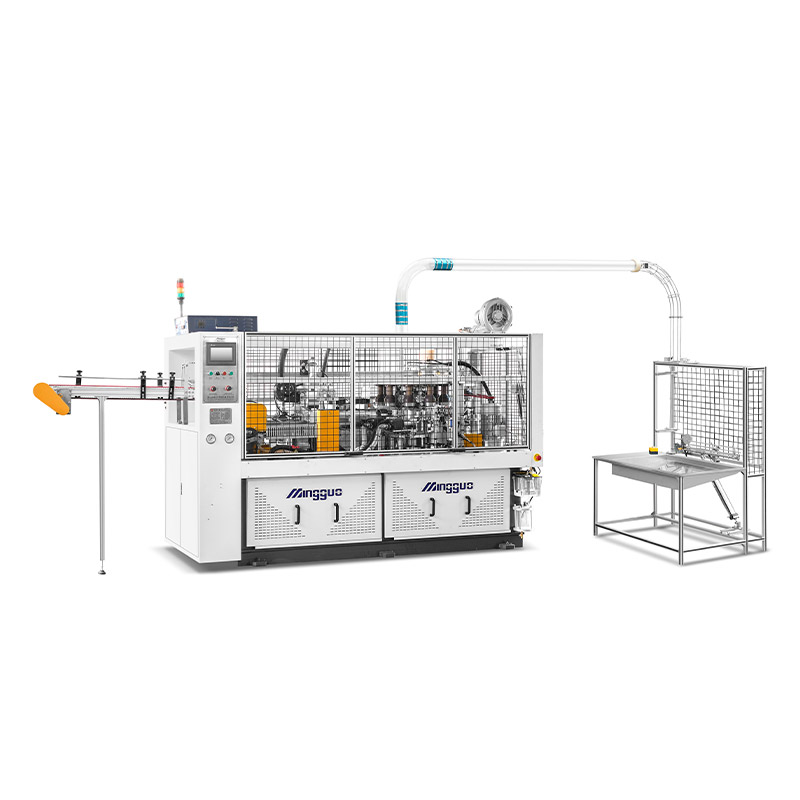
Paper cups specifications:
200 pcs/min
4-16oz(100-450mI) (mold exchangeable)
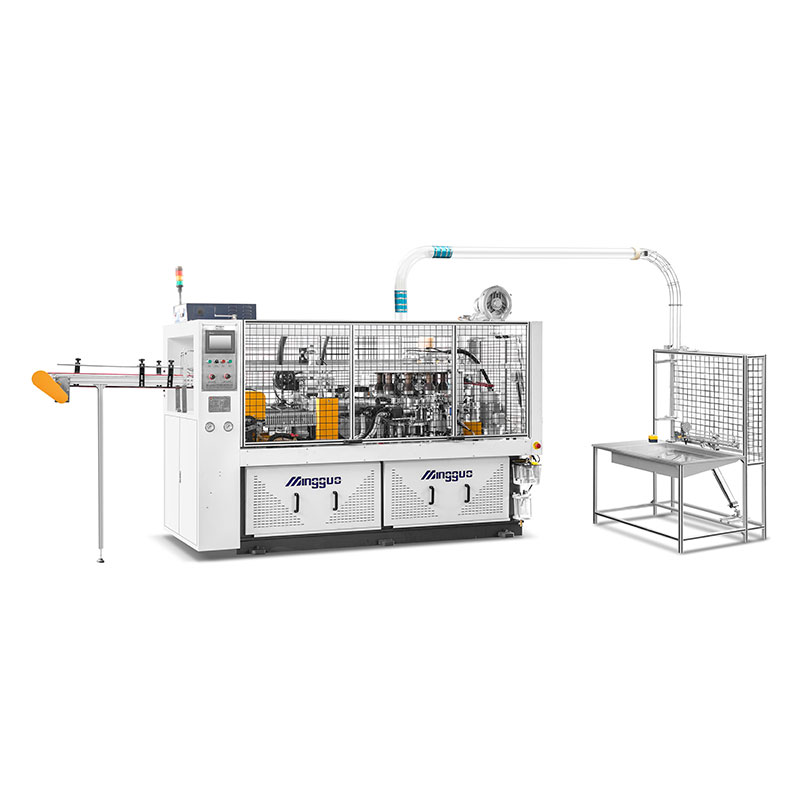
Paper cups specifications:
4-16oz (can be customized by max.26oz)
(100-450ml)(mold exchangeable)
Top:55-105mm
Height:60-135mm
Bottom:55-75mm
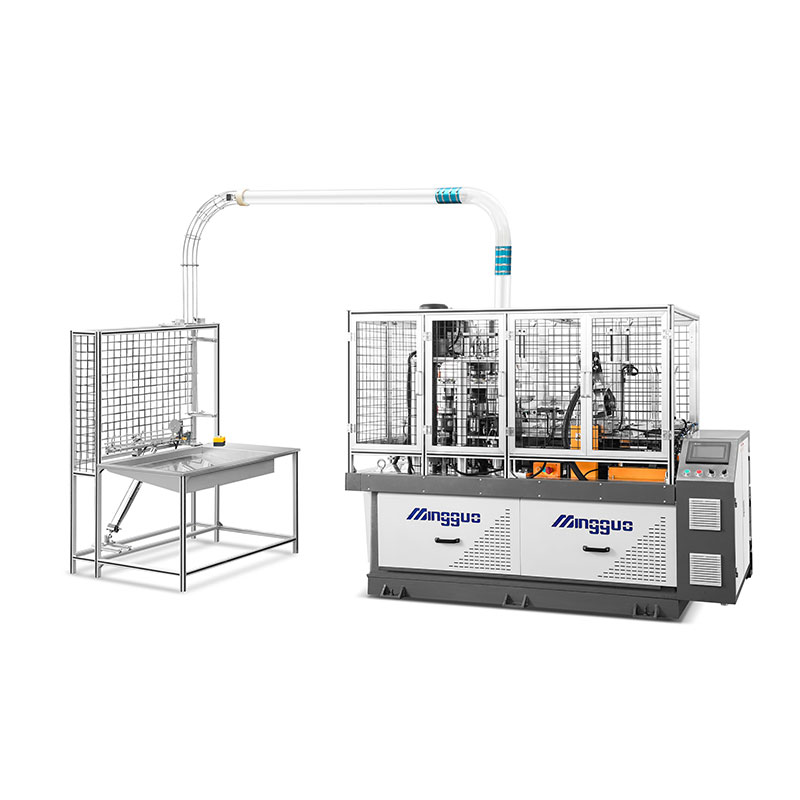
Paper cups specifications:
(100-350ml)(mold exchangeable)
Top: 55-90mm
Height: 60-110mm
Bottom: 40-65mm


