
 English
 Español
 Pусский
 عربي
عربي How Does a Cup Top Flatten Machine Prepare Cups for Sealing?
Publish Time:
Author:
Mingguo
Visit: 4

You're running a paper cup production line — yogurt cups, dessert cups, or beverage cups with foil lids. The final step before filling and sealing is ensuring the cup rim is flat enough for a reliable seal. A cup top flatten machine transforms the rolled rim of a formed paper cup into a flat, even surface — creating the ideal sealing surface for aluminum foil or film lids. This guide covers what a cup top flatten machine does, how it works, the key specifications to look for, and the applications where flat rims make the difference between a sealed product and a leaker.
After a paper cup is formed, the rim is typically curled or rolled to create a smooth drinking edge. While this is ideal for beverage cups, it creates a problem for cups that need to be sealed with a foil lid — yogurt cups, dessert cups, and certain beverage containers. The rolled rim creates an uneven sealing surface, making it difficult to achieve a consistent, leak-proof seal. A cup top flatten machine solves this by taking the formed cup and pressing the rolled rim flat. The result is a smooth, even surface that provides consistent contact for foil or film sealing, reducing the risk of leaks and improving package integrity. The MG-DTF uses ultrasonic technology to achieve this flattening efficiently and consistently.
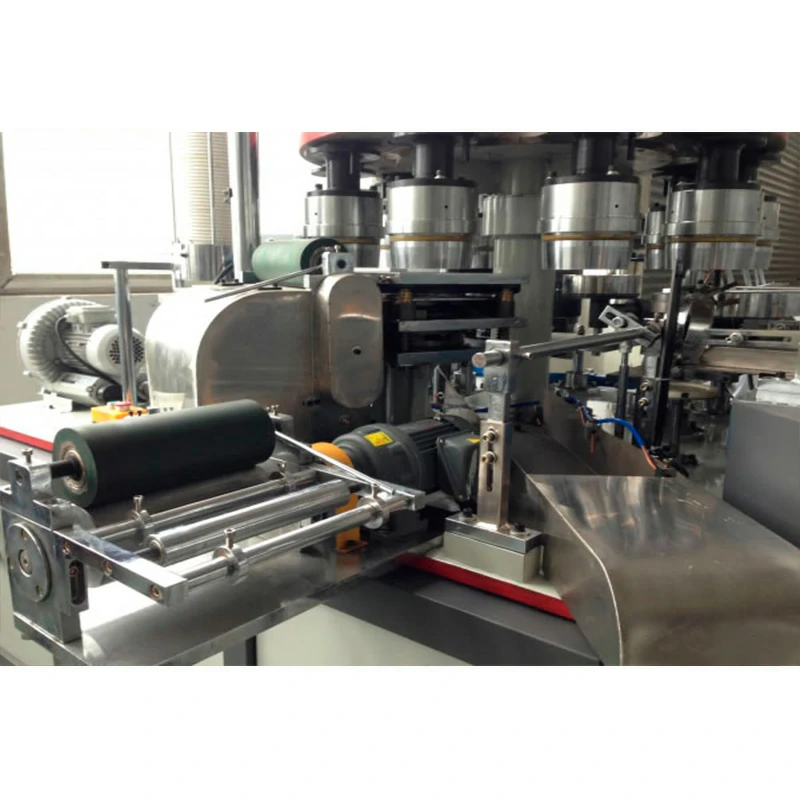
The cup is fed into the machine and positioned under the ultrasonic flattening head. High-frequency ultrasonic energy is applied to the rim, softening the paper material just enough to allow it to be pressed flat without tearing or damaging the cup. The result is a smooth, flat rim that provides a consistent sealing surface for foil or film lids.
A flat rim is essential for achieving a reliable seal. Uneven surfaces create gaps where air and moisture can enter, compromising product freshness and increasing the risk of leaks. Flat rims provide consistent contact with the sealing head, ensuring every cup seals properly.
The MG-DTF is a dual-station machine that processes two cups simultaneously. This design effectively doubles the output of a single machine without requiring a second machine, a second operator, or additional floor space.
Each station operates independently, with its own cup feeding, detection, flattening, and discharge mechanisms. If one station needs maintenance, the other can continue running, minimizing production interruptions.
A dual-station machine occupies roughly the same footprint as a single-station machine but delivers twice the output. For production facilities where floor space is at a premium, this is a significant advantage.
The MG-DTF uses ultrasonic technology to flatten cup rims, controlled by a PLC and HMI system. This approach offers several advantages over traditional mechanical pressing methods.
Ultrasonic energy softens the paper material uniformly, producing consistent flattening results even when paper thickness or density varies slightly between batches.
Unlike mechanical pressing that relies on brute force, ultrasonic flattening uses high-frequency vibrations to soften the material before pressing. This reduces the risk of cracking, tearing, or deforming the cup during flattening.
The entire process is controlled through a PLC and HMI system, allowing operators to monitor and adjust parameters in real time. This reduces setup time and ensures consistent quality across the entire production run.
| Specification | MG-DTF Value | Why It Matters |
|---|---|---|
| Production speed | 80-100 cups/min | High-throughput for commercial production |
| Max. cup diameter | 120mm | Covers most standard cup sizes |
| Voltage | 220V/380V | Flexible power options |
| Total power | 2.5KW | Energy-efficient operation |
| Machine weight | 250KG | Sturdy but manageable |
| Dimensions | 1370×1250×1800mm | Compact footprint |
Cup top flatten machines are used wherever paper cups need to be sealed with foil or film lids. The MG-DTF was specifically developed to fill a gap in the yogurt cup market.
Yogurt cups are the primary application for cup top flattening. The flat rim provides a consistent sealing surface for foil lids, ensuring product freshness and preventing leaks.
Dessert cups, pudding cups, and other single-serve dairy products also benefit from flat rims. The sealing process is the same — a flat rim ensures a consistent seal.
Some beverage cups — particularly those used for cold drinks with foil seals — require flat rims for reliable sealing. The same process applies: flatten the rim, then seal.
What is the production speed of the MG-DTF?
The machine produces 80-100 cups per minute, making it suitable for high-volume commercial production.
What cup sizes can the machine handle?
The MG-DTF handles cup diameters up to 120mm, covering most standard yogurt, dessert, and beverage cup sizes.
How does ultrasonic flattening compare to mechanical flattening?
Ultrasonic flattening uses high-frequency vibrations to soften the material before pressing, producing consistent results without the risk of cracking or tearing that can occur with mechanical pressing.
What power options are available?
The machine is available in 220V and 380V configurations, with total power of 2.5KW.
What is the footprint of the machine?
The MG-DTF measures 1370×1250×1800mm with a weight of 250KG.
Selecting a cup top flatten machine comes down to three factors: speed (match your throughput), cup size (match your product range), and power configuration (match your facility). Contact Mingguo for a customized quote → —their team can help you select the right MG-DTF configuration for your specific cup production needs.
Mingguo Machinery manufactures the MG-DTF Cup Top Flatten Machine for paper cup packaging lines. The machine features dual-station design with ultrasonic flattening technology, PLC and HMI control, production speed of 80-100 cups per minute, and maximum cup diameter of 120mm. Available in 220V/380V configurations with total power of 2.5KW. Applications include yogurt cups, dessert cups, and other paper cups requiring foil or film sealing. Mingguo Machinery provides comprehensive technical support, installation guidance, and after-sales service. Connect with Mingguo Machinery to discuss your cup size requirements, production volume targets, and power specifications.
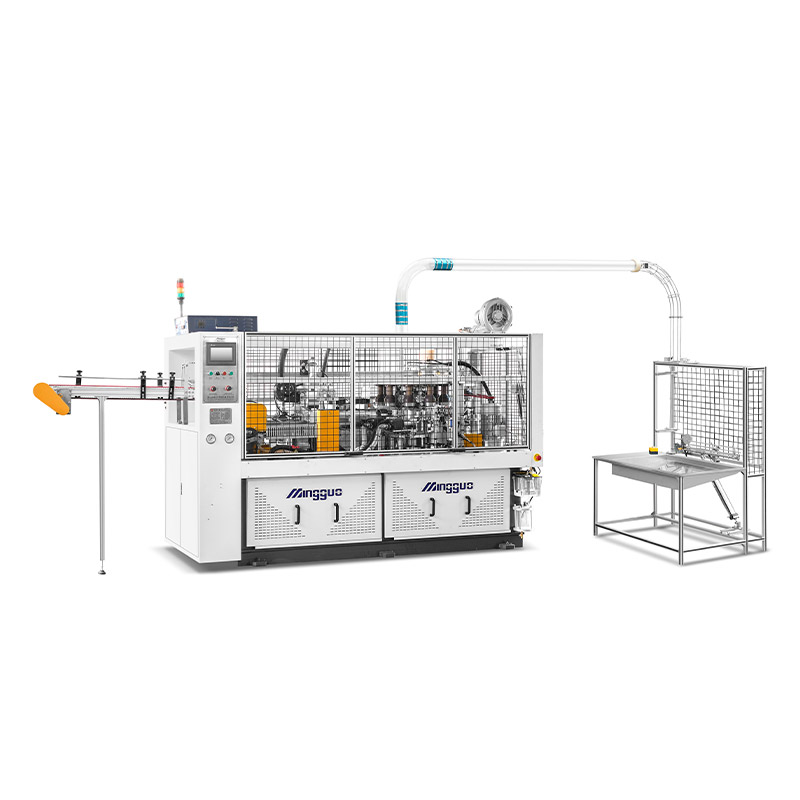
Paper cups specifications:
200 pcs/min
4-16oz(100-450mI) (mold exchangeable)
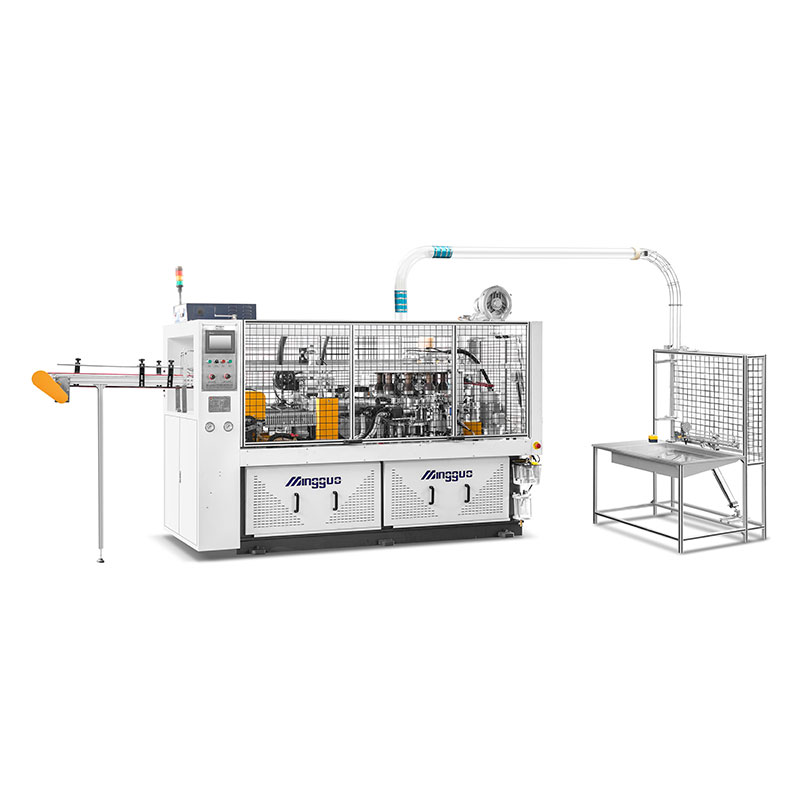
Paper cups specifications:
4-16oz (can be customized by max.26oz)
(100-450ml)(mold exchangeable)
Top:55-105mm
Height:60-135mm
Bottom:55-75mm
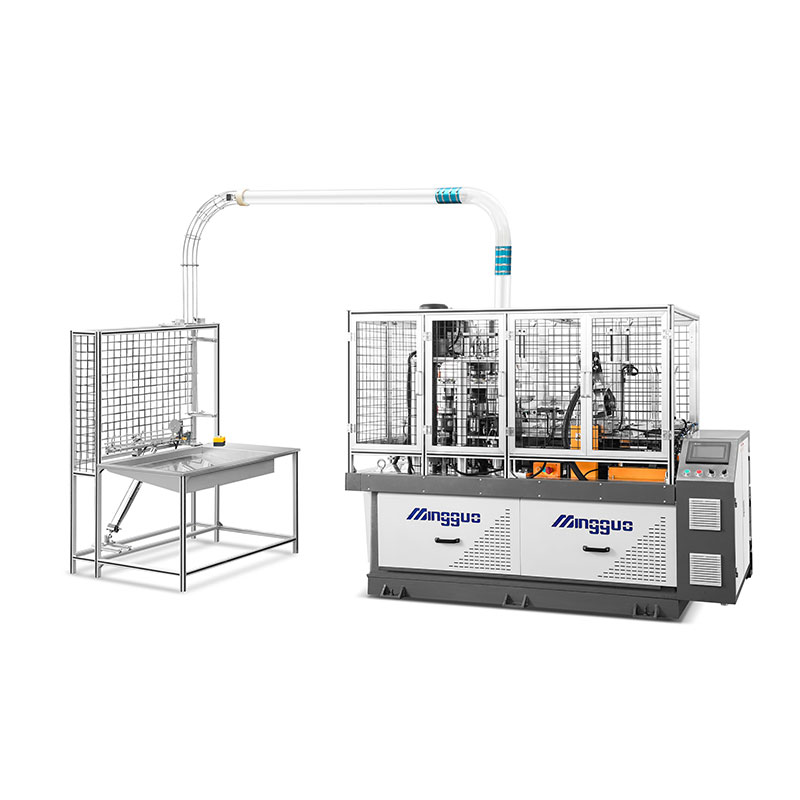
Paper cups specifications:
(100-350ml)(mold exchangeable)
Top: 55-90mm
Height: 60-110mm
Bottom: 40-65mm


