
 English
 Español
 Pусский
 عربي
عربي What Is a Realistic Cups‑Per‑Minute Rate for a High Speed Intelligent Paper Cup Machine?
Publish Time:
Author:
Mingguo
Visit: 14

A packaging plant manager sees a machine advertised at 200 cups per minute. He buys it, installs it, and after a month of production, the shift report shows an average of 135 cups per minute. The machine is not broken. The manufacturer‘s claim was not false. The gap between theoretical peak speed and real‑world output comes from factors that no spec sheet can capture: cup size, paper weight, double‑wall vs single‑wall, changeover frequency, and operator skill. This article explains the standard output ranges for intelligent paper cup machines, what reduces real‑world production, and how to estimate the right capacity for your packaging line.
A paper cup machine with full servo control and PLC intelligence is capable of high speeds, but the actual cups‑per‑minute rate depends on the specific model and the product being made. The following sections break down what you can realistically expect.
Intelligent paper cup machines come in several speed tiers, depending on the number of lanes, the forming technology, and the intended cup type.
Small to mid‑size single‑lane machines typically run 40‑60 cups per minute. These are often entry‑level or older mechanical models. They are suitable for startups, small cafes, or low‑volume custom orders where changeover flexibility matters more than raw speed.
High speed single‑wall machines with full servo control and intelligent recipe storage run 140‑200 cups per minute for standard cup sizes (4‑12oz). The TOPPRO series from Sincere Machinery, for example, reaches 160‑200 cups/min on the SFBJ‑600 model and 130‑150 cups/min on the GZB‑600 model. The fastest machines use ultrasonic sealing, which eliminates warm‑up time between changeovers and allows consistent sealing across a wider range of paper weights.
Double‑wall cup machines run slower, typically 60‑100 cups per minute. The extra layer and the bonding process add time to each cycle. A plant that produces both single‑wall and double‑wall cups may need two machines or accept the slower speed on a dual‑purpose line.
Bowl and large‑format cup machines (16‑32oz) also run slower, often 50‑70 cups per minute, because the larger diameter requires more heating and longer cooling times.
| Machine Type | Typical Speed Range (cups/min) | Best For |
|---|---|---|
| Small single‑lane (mechanical) | 40‑60 | Startups, small batches, custom sizes |
| High speed single‑wall (servo) | 140‑200 | Coffee chains, high‑volume takeaway cups |
| Double‑wall (servo) | 60‑100 | Insulated cups for hot beverages |
| Bowl / large cup (16‑32oz) | 50‑70 | Soup, noodles, family‑size portions |
Data sourced from industry‑standard paper cup machine specifications.
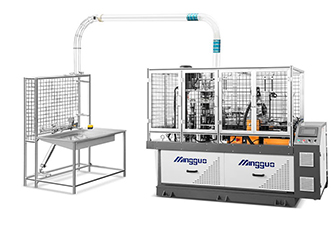
The spec sheet speed assumes ideal conditions: a single cup size running for hours, perfect paper stock, a skilled operator, and no interruptions. Real‑world production is lower. Here are the main factors that reduce output.
Cup size and wall layers – A 4oz espresso cup runs faster than a 16oz large cup because the forming cycle is shorter. Double‑wall cups require an extra bonding station, which reduces speed by 20‑30% compared to single‑wall on the same machine.
Paper coating type – Single PE (polyethylene) coated paper seals quickly. Double PE requires slightly more heat and dwell time. Water‑based and PLA‑coated papers may need temperature adjustments that slow the cycle. Ultrasonic sealing machines handle double PE and PLA more consistently than hot‑air machines, but the speed difference between paper types is still measurable.
Operator skill and material feeding – An experienced operator can keep the paper rolls and bottom paper rolls feeding without interruption. A new operator may stop the machine frequently to reload or clear jams. Automatic roll splices and non‑stop feeders reduce this variability but are not standard on all models.
Changeover frequency – A machine running the same cup size for a full shift achieves close to its rated speed. A machine that changes sizes three times per shift loses time to mold swapping, parameter recall, and test runs. An intelligent machine with recipe storage reduces changeover time from 30‑45 minutes to 5‑10 minutes, but the lost production during the changeover still reduces the average output across the shift.
Maintenance and cleaning – Sealing bars, ultrasonic horns, and cutting knives require periodic cleaning. Paper dust accumulates on the sensors. A machine that is not cleaned daily will develop slow jams and misfeeds that reduce effective output.
Do not buy a machine based solely on its peak speed. Instead, calculate your required effective capacity, then add a buffer.
Estimate your daily order volume in number of cups. For a coffee chain producing 50,000 cups per day across two shifts, the average required output is about 3,125 cups per hour (assuming 16 hours of runtime).
Account for uptime. No machine runs 100% of the shift. Paper roll changes, bottom paper splices, quality checks, and operator breaks consume time. A realistic uptime percentage for a well‑run line is 80‑85%. For a new line, expect 70‑75% in the first few months.
Add a 15‑20% buffer for peak production periods. If your average order is 3,000 cups per hour, target a machine that can produce 3,600‑4,000 cups per hour at peak.
Convert to machine speed. Divide the hourly target by 60 to get cups per minute. For 4,000 cups per hour, you need a machine rated at 67 cups per minute — well within the range of a high speed single‑wall machine.
A paper cup machine rated at 160 cups per minute with 85% uptime produces about 8,160 cups per hour — enough for a 65,000‑cup shift. That same machine running at 50% of its speed due to small cup sizes and frequent changeovers might only produce 4,800 cups per hour. The key is matching the machine to your actual production pattern, not just the peak number on the brochure.
An intelligent paper cup machine with full servo control and recipe storage reduces the gap between peak speed and real output. Automatic lubrication eliminates the 15‑minute daily greasing routine that operators often skip. Quick‑change molds cut changeover time from 30 minutes to 5‑10 minutes. Ultrasonic sealing removes the warm‑up period that wastes the first 50 cups after a restart. For a plant running multiple cup sizes daily, these features can increase effective output by 20‑30% compared to a mechanical machine of the same peak speed.
Does a double‑wall machine run slower than a single‑wall?
Yes, double‑wall cup forming requires an additional station to bond the outer sleeve to the inner cup. A single‑wall machine that runs 160 cups per minute will typically run double‑wall at 60‑100 cups per minute on a dedicated double‑wall line or 80‑120 cups per minute if the machine can be configured for both.
Can I increase capacity by adding more molds to a single turret?
Some intelligent paper cup machines support multiple‑lane operation, where two or three cups are formed simultaneously from a single paper web. This effectively multiplies the output without increasing the cycle speed. However, not all machines are designed for multi‑lane operation. Check whether the model supports twin‑lane or triple‑lane forming.
What is a realistic uptime percentage for daily operation?
A well‑managed line with automatic roll splicing, a quick‑change mold system, and a skilled operator can achieve 85‑90% uptime. A typical line with manual roll changes and moderate operator experience achieves 75‑80%. Uptime below 70% indicates either machine reliability issues or inefficient changeover procedures.
How does cup size affect the machine‘s maximum speed?
Smaller cups (4‑8oz) run faster because the forming station has less material to move and the sealing time is shorter. Larger cups (12‑16oz) run 10‑20% slower. The machine’s control system adjusts the cycle time automatically based on the stored recipe; the operator does not need to manually change timing.
Do I need a servo‑driven machine for high speed?
For speeds above 120 cups per minute, a servo‑driven machine with independent motor control is recommended. Mechanical cam‑driven machines cannot maintain registration at high speeds and require frequent adjustments. Servo machines also store recipe settings, making changeovers faster.
When selecting a paper cup machine for your production line, do not focus only on the peak cups‑per‑minute number. Instead, calculate your required effective output based on daily volume, uptime, and changeover frequency. Choose a machine rated at least 25% higher than your calculated need to provide buffer for peak periods and future growth. Intelligent features — recipe storage, quick‑change molds, ultrasonic sealing, automatic lubrication — reduce the gap between spec sheet speed and real‑world output.
For a high volume coffee cup plant running 8‑12oz single‑wall cups, a machine rated at 160‑200 cups per minute is appropriate. For a plant that runs double‑wall cups or large‑format bowls, prioritize changeover speed and material flexibility over raw peak speed. For a startup, a mid‑speed machine (100‑120 cups per minute) with intelligent controls may offer the best balance of cost and capability.
The TOPPRO intelligent paper cup machine series from Sincere Machinery offers models ranging from 65 to 200 cups per minute, with full servo + PLC control, ultrasonic sealing, quick‑change molds, automatic lubrication, and recipe storage. The SFBJ‑600 runs 160‑200 cups/min for single‑wall and 60‑100 cups/min for double‑wall; the GZB‑600 runs 130‑150 cups/min; the LF‑110 runs 100‑120 cups/min; the LF‑70 runs 65‑75 cups/min for smaller volumes. CE certified, with on‑site installation and training.
【Request a quote from Sincere Machinery】
Contact Sincere with your target cup size range, daily output requirement, and whether you need single‑wall, double‑wall, or both to receive a machine recommendation and a production capacity estimate based on your actual uptime assumptions.
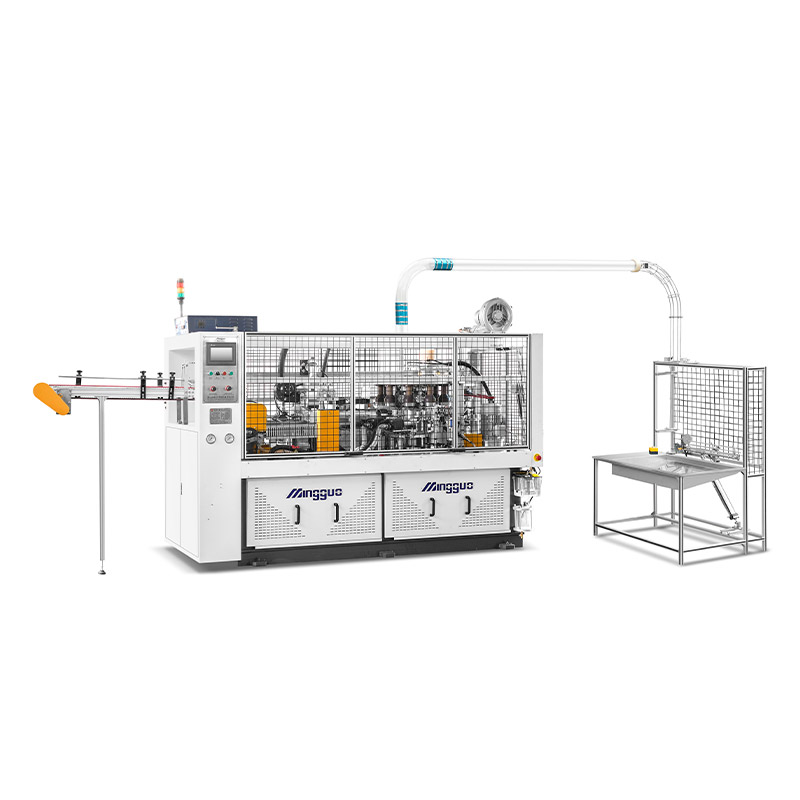
Paper cups specifications:
200 pcs/min
4-16oz(100-450mI) (mold exchangeable)
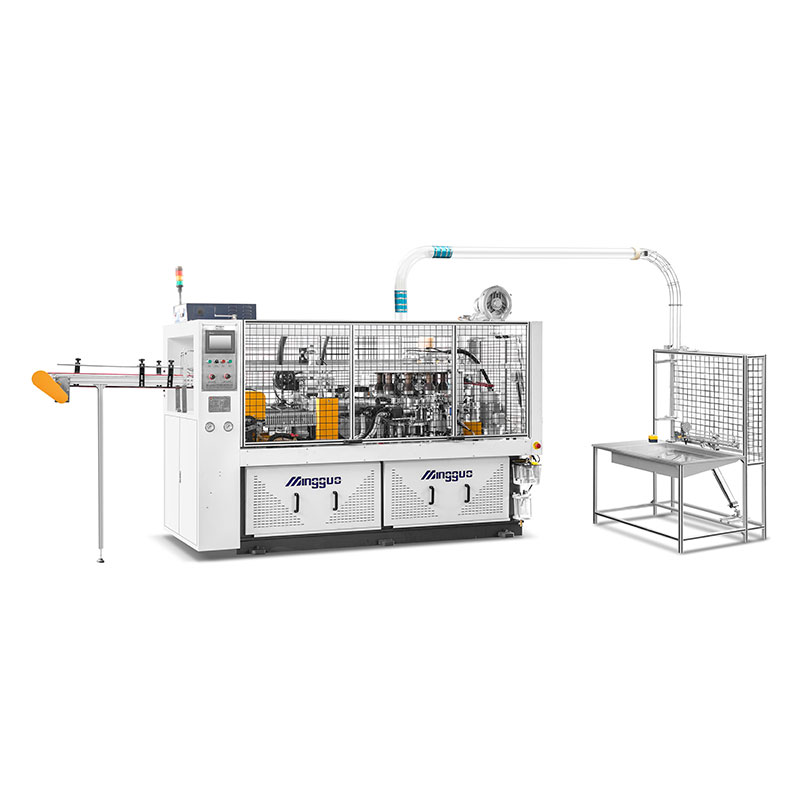
Paper cups specifications:
4-16oz (can be customized by max.26oz)
(100-450ml)(mold exchangeable)
Top:55-105mm
Height:60-135mm
Bottom:55-75mm
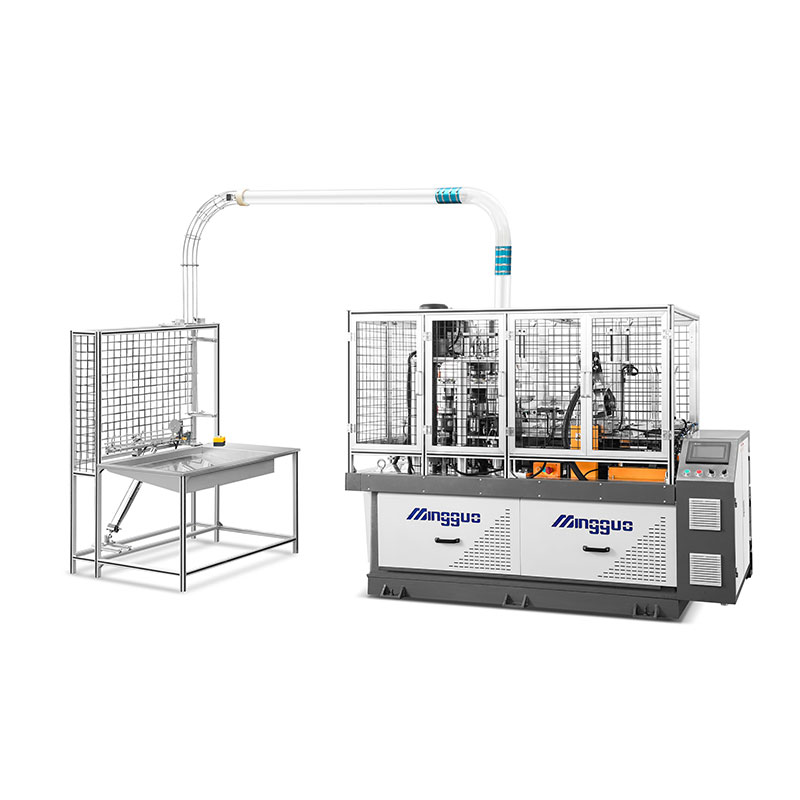
Paper cups specifications:
(100-350ml)(mold exchangeable)
Top: 55-90mm
Height: 60-110mm
Bottom: 40-65mm


